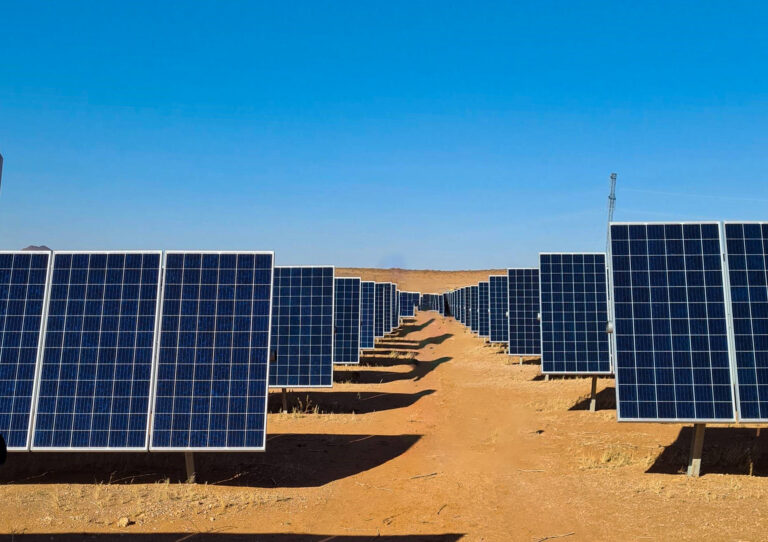
Small importers are turning imported solar panels into functioning, localised energy systems across Africa. By supplying installers, co-developing products for local conditions, and supporting financing and logistics, these companies are expanding distributed solar capacity while also creating jobs and building technical skills.
Bonface Orucho, bird story agency
In a warehouse in Cape Town’s Montague Gardens, racks of inverters and lithium batteries hum, ready for the next fleet of installers. Joule Energy Solutions, founded in 2020, has turned this space into the nerve centre of a nationwide distribution network, supplying hundreds of solar installers from Johannesburg to Durban, Bloemfontein, and Gqeberha.
As the sole importer of China’s TBB POWER inverters and batteries and distributor of brands like Solis, Seraphim, and Astronergy, the company has become a critical link between imported solar modules and functional, localised energy systems.
Its equipment now powers lift backups in Sea Point apartment complexes, rooftop arrays for supermarkets in Dullstroom, and mini-grid installations in agro-processing plants in the Western Cape.
“Our aim is to make installers more productive,” Francois Boonzaaier, the national branch manager and head of operations, explains. “We test, refine, and co-develop equipment best suited to the South African market and climate.”
Joule Energy Solutions demonstrates how nimble, small-scale importers are converting large-scale solar deliveries into practical, decentralised energy solutions.
The continent’s import surge provides the broader context. In the year leading up to June 2025, Africa imported 15,032 megawatts of solar modules, a 60% increase from the previous year.
Over the last two years, imports outside South Africa nearly tripled, from 3,734 MW to 11,248 MW. Twenty countries set new records for solar imports in this period, with 25 countries bringing in at least 100 MW each, up from 15 countries the previous year. Algeria saw the highest growth, increasing imports thirty-threefold; Zambia’s imports grew eightfold, and Burkina Faso’s sixfold. South Africa remained the top importer, with Nigeria overtaking Egypt for second place.
The potential generation from these panels is substantial. If fully deployed, the imports to Sierra Leone alone could provide electricity equivalent to 61% of its 2023 output, while Chad’s imports would cover 49%. Imports in Liberia, Somalia, Eritrea, Togo, and Benin could each contribute over 10% to total electricity generation.
Even though Africa’s overall share is modest, about 2% of total continental generation, heavily weighted by South Africa and Egypt, the pace of distributed solar deployment is clearly accelerating.
The economic rationale for distributed solar remains strong. In Nigeria, a 420-watt panel priced around sixty dollars can produce 550 kilowatt-hours per year, roughly equivalent to the same amount generated by $60 of diesel, implying a six-month payback on the panel itself. In countries with higher diesel costs, the payback is even shorter.
Across the top ten importing countries, the value of refined petroleum imports exceeds solar panel imports by 30 to 107 times, meaning each new panel installed directly reduces diesel dependence and foreign exchange pressure.
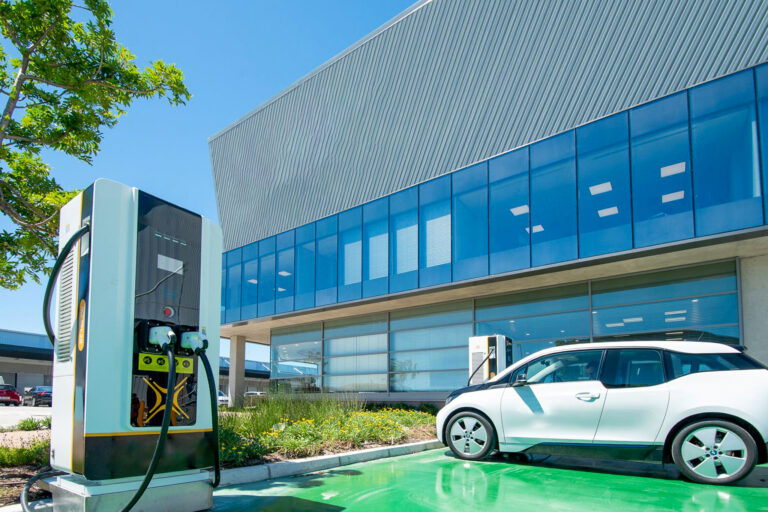
Battery storage is emerging as the next frontier. South Africa’s Red Sands BESS, delivering 153 MW/612 MWh in 2025, will be the continent’s largest, while Senegal’s 16 MW Walo solar plus 10 MW/20 MWh battery project and the Shalazile mini-grid, which serves over 400 households and small businesses in South Africa, show the breadth of distributed storage initiatives. Emerging chemistries like lithium iron phosphate, vanadium redox flow, and metal-hydrogen promise safety and climate suitability for African applications.
Local manufacturing ambitions are expanding but remain limited. Morocco and South Africa each operate roughly 1 GW annual module capacity, while Egypt is adding 3 GW, 2 GW, and 4 GW facilities through EliTe Solar, Sunrev Solar, and Masdar, respectively, with operations slated between 2025 and 2026. Despite these efforts, over 80% of Africa’s panels still come from China, exposing the continent to supply chain and pricing volatility.
This is where companies like Joule Energy Solutions become pivotal. By testing, adapting, and co-developing products for local conditions, supporting installers with logistics and financing, and deploying commercial- and industrial-scale systems, they translate raw imports into tangible, functioning infrastructure. In doing so, they not only deliver electricity but also generate jobs, skills, and technical capacity, professionalising the installer ecosystem and helping smaller firms take on larger projects confidently.
The pattern extends beyond South Africa. In Nigeria, Bboxx’s partnership with CreditChek aims to provide solar access to 17 million households and businesses by combining credit scoring, PAYG financing, and distributed product lines. Across West Africa, local assemblers and service providers like Auxano Solar in Nigeria, REDAVIA, Deng Ltd, and Black Star Energy in Ghana are expanding commercial-scale solar with integrated installation, operations, and financing solutions.
The growth is visible in employment as well as electricity. Kenya and Nigeria now lead Africa’s off-grid and distributed renewables boom, each supporting about 50,000 jobs in 2021, according to Power for All. That’s a sharp rise from around 15,000 five years earlier, as solar capacity across the continent races toward 100 GW by 2030.
Ember’s analysis underscores that this is only the beginning. Many panels are still in transit or storage, and distributed solar is likely to drive the next phase of electrification faster than utility-scale projects alone. Satellite imagery already reveals rooftops, factories, churches, and offices across Africa adorned with new panels, even in smaller capitals like Monrovia.
bird story agency
Useful link for editors: https://ember-energy.org/app/uploads/2025/08/Report-Ember-The-first-evidence-of-a-take-off-in-solar-in-Africa.pdf