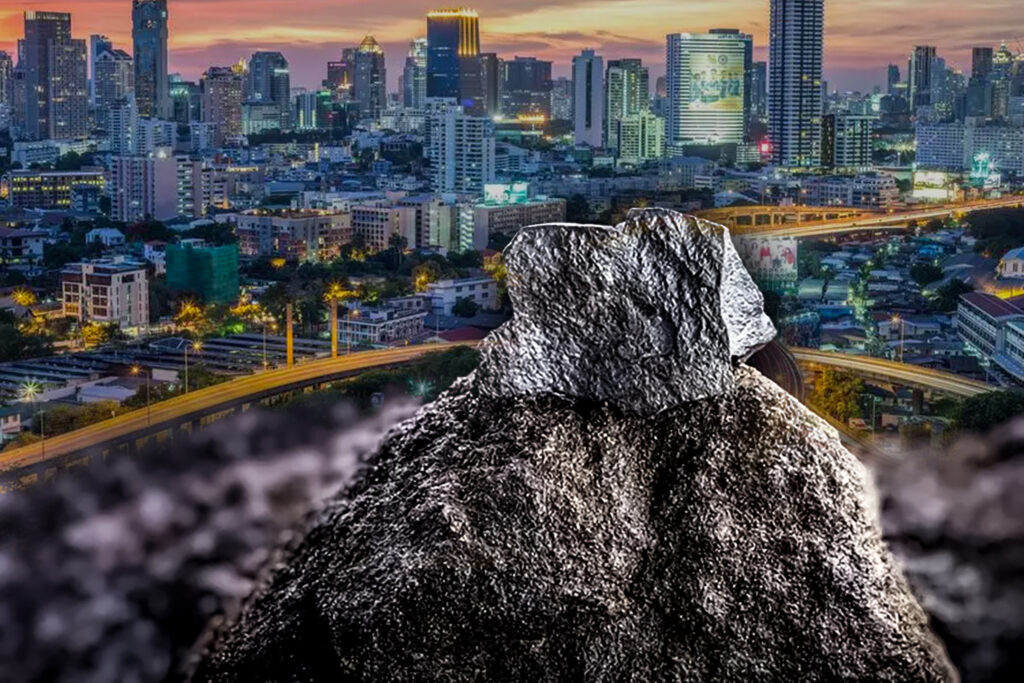
Africa’s vast high-grade iron ore reserves are increasingly being put to use for industrial growth within the continent. Several African governments and mining companies in the region are ramping up investments in iron ore projects as part of a broader push to revive domestic steel industries and reduce reliance on imported construction materials.
Bonface Orucho, bird story agency
Guinea, Liberia and the Democratic Republic of the Congo are among the countries in Africa whose governments are ramping up iron investments this year to revive domestic steel industries and reduce reliance on imported construction materials. It’s a strategic move to boost industrialization and infrastructure growth. The shift comes as global demand for iron ore continues to rise. The market is projected to grow from about US$313 billion in 2026 to roughly US$425 billion by 2034, driven largely by infrastructure expansion and demand from the construction and automotive sectors, according to projections cited by Energy Capital & Power.
Iron ore has been identified by the Africa Finance Corporation (AFC) as a strategic resource, critical for advancing Africa’s industrialization goals. The continent holds a large share of the world’s untapped resources. According to the Africa Finance Corporation, the continent has an estimated US$8.6 trillion in undeveloped mineral wealth, with iron ore now emerging as a strategic resource for building domestic steel and construction industries. The corporation estimates Africa’s total mine-site mineral value at about US$29.5 trillion, representing roughly 20% of global mineral wealth. Yet, much of that value remains locked at the extraction stage. According to the Africa Finance Corporation, minerals generate far greater economic returns when processed into industrial products such as steel, aluminum and alloys rather than exported in raw form.
“Mine-site values significantly understate Africa’s true potential,” the corporation said in its 2026 Compendium of Africa’s Strategic Minerals, noting that value expands dramatically when minerals are processed closer to where they are ultimately used.
Among the projects drawing global attention is the vast Simandou iron ore deposit in Guinea, widely considered the world’s largest untapped high-grade iron ore reserve. The project is expected to produce up to 120 million tonnes of iron ore annually once fully operational, according to project estimates cited by companies involved in the development.
Global steel producers are already moving to secure supplies from the deposit. Among them is China Baowu Steel Group, the world’s largest steelmaker, which has expanded its participation in the project as Chinese manufacturers seek long-term access to high-grade ore.
Guinea is also positioning Simandou as the cornerstone of a broader economic transformation strategy. The government’s Simandou 2040 development programme includes 122 priority projects across infrastructure, agriculture, education and healthcare, according to national planning documents. Officials say the aim is to use mining investment to stimulate wider industrial development.
Elsewhere in West Africa, iron ore production is also expanding in Liberia. The country expects output to reach between 25 million and 30 million tonnes annually once current mining projects reach full capacity, according to Liberia’s Ministry of Mines and Energy. Expansion projects led by ArcelorMittal and other operators are driving the increase. Companies including Cavalla Resources, Westcrest, Zodiac Exploration and Bao Chico Resources are also developing or exploring iron ore deposits across the country.
The renewed activity reflects a broader effort by African governments to capture more value from mineral resources. Many economies on the continent export raw materials but import finished steel products used in construction, transport infrastructure and manufacturing. That imbalance has renewed calls for stronger mineral beneficiation and domestic processing industries. According to the Africa Finance Corporation, the steel value chain illustrates one of the clearest examples of this disconnect.
Africa holds world-class reserves of iron ore and key steelmaking inputs such as manganese, chromium and nickel, yet the continent remains heavily dependent on imports of finished steel products. The report notes that African mineral supply chains are often tied more closely to demand cycles in Asia than to the continent’s own infrastructure needs.
This exposure has become more visible in recent years as slower construction activity in Asia, particularly in China’s property sector, has weakened demand for steel inputs exported from Africa. At the same time, African economies continue to expand roads, railways, housing and energy infrastructure that require large volumes of steel. For policymakers, this mismatch highlights the importance of aligning mineral extraction, processing capacity and industrial demand.
“The constraint is not a lack of resources,” according to Samaila Zubairu, President and Chief Executive Officer of the Africa Finance Corporation.
“The challenge is aligning mineral production, infrastructure investment and processing capacity around Africa’s long-term demand fundamentals.”
In South Africa, one of the continent’s most industrialised economies, policymakers are also seeking to revive mining investment. President Cyril Ramaphosa said during the country’s State of the Nation Address earlier this year that the government aims to attract about R2 trillion (more than US$117 billion) in mining investment over the next five years.
“Our iron ore reserves are valued at more than R40 trillion, making mining a sunrise industry,” Ramaphosa said.
“After many years of declining investment in exploration, we are dedicating funds to geological mapping and exploration to harness our critical mineral reserves.”
Similar ambitions are emerging in Central Africa. In the Democratic Republic of the Congo, authorities are exploring the potential of iron ore alongside the country’s dominant copper and cobalt sectors. Officials estimate that the country holds roughly US$24 trillion in untapped mineral resources, according to the Ministry of Mines. Speaking at an industry event in Cape Town, Mines Minister Louis Watum Kabamba highlighted the scale of the opportunity.
“We have 20 billion tons of iron ore, enough to supply steel for Africa. The continent must identify what is critical and prioritise it to drive regional growth,” he said in an interview with Energy Capital & Power.
Yet, much of that demand is currently met through imports. According to international trade data, African countries import large volumes of finished steel from major producers including China, India and Turkey. For policymakers, that dependence highlights a structural gap in the continent’s mineral value chains.
Africa exports iron ore and other steelmaking inputs, but imports the finished products used in construction, transport infrastructure and manufacturing. When African countries import steel, they are often importing products made from minerals originally mined on the continent, including manganese from Gabon and South Africa, chromium from Zimbabwe and nickel from Madagascar, according to analysis by the Africa Finance Corporation. Despite large iron ore reserves, Africa’s steel production has grown only modestly.
Output increased from about 15 million tonnes in 2014 to just over 26 million tonnes in 2024, according to data compiled by the World Steel Association and industry analysis by CRU Group. Much of that production relies on electric arc furnace technology, which uses recycled scrap metal rather than newly mined iron ore. Electric arc furnaces require lower upfront investment and can operate at smaller scale, making them suitable for fragmented markets where steel demand remains uneven.
bird story agency
Useful links for editors:https://www.africafc.org/news-and-insights/news/africa-must-rewire-us-29-5-trillion-mineral-endowment-around-industry-infrastructure-and-demand-africa-finance-corporation-study-says, https://www.weforum.org/stories/2026/03/africa-iron-ore-production-steel-strategy/, https://www.eurasiareview.com/09032026-african-iron-ore-driving-industrialization-investment-and-regional-growth-oped/