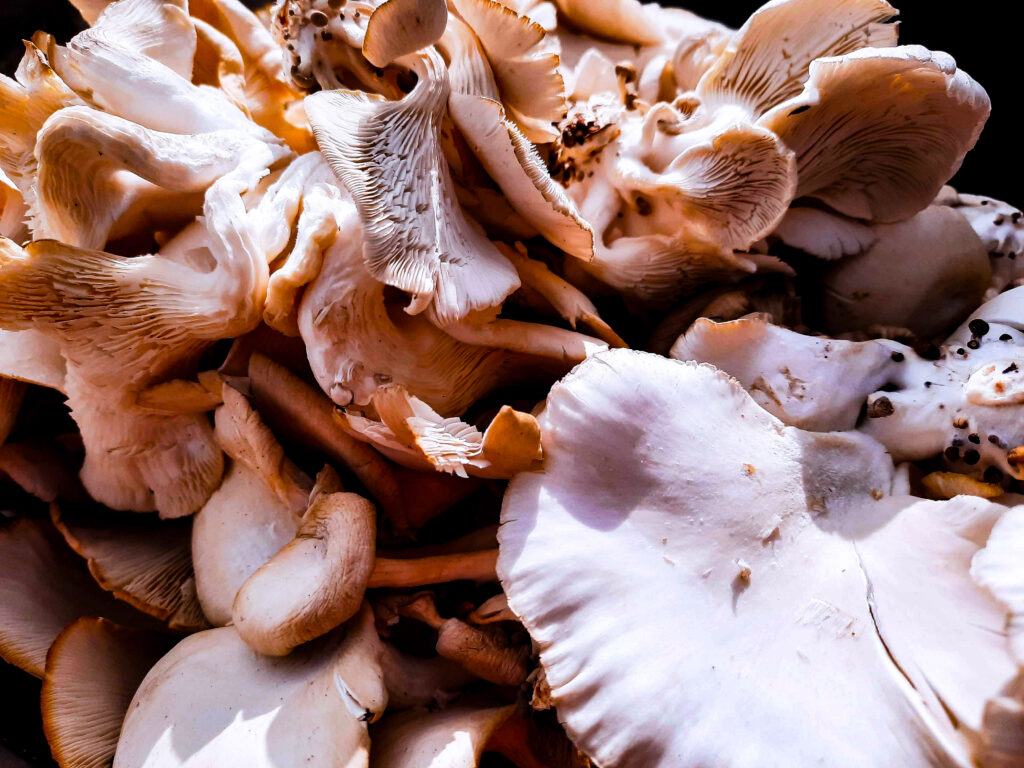
Africa is moving to formally include fungi, or “funga,” alongside plants and animals in conservation systems. The shift is forcing a rethink of how ecosystems are measured, how carbon is counted, and how conservation funding is allocated.
Bonface Orucho, bird story agency
Africa’s biodiversity agenda is shifting as scientists and conservation groups push to formally include fungi, or “funga,” alongside plants and animals. This move is forcing a rethink of how ecosystems are measured, how carbon is accounted for, and how conservation funding is allocated.
A recent April 2026 analysis by The Guardian frames this shift as the emergence of an African fungal conservation movement, linking new scientific evidence with coordinated advocacy across the continent.
In the report, Malagasy scientist Anna Ralaiveloarisoa describes fungi as “some of the most important things in the world… They feed 90% of terrestrial plants. Without them, there is no life on the Earth.”
The statement reflects a growing scientific consensus that fungi underpin most terrestrial ecosystems.
Researchers and conservationists across countries, including Madagascar, the Democratic Republic of Congo, Kenya, and Zimbabwe, are now actively pushing to reposition fungi within conservation frameworks that have historically excluded them.
The gap is structural.
“Most conservation frameworks were not designed to capture fungal systems. That means decisions are being made on incomplete data,” according to Fredrick Nyawanga of the Kenya Forest Service.
According to scientists cited in the Guardian analysis, this omission is foundational.
New scientific tools are already changing the story in Africa. Environmental DNA mapping and soil microbiome research are enabling measurement of fungal biodiversity at scale, revealing that vast underground ecosystems remain largely undocumented.
“Science is catching up with how ecosystems actually work. Once you can measure what was invisible, you change how decisions are made,” Nyawanga said.
Madagascar’s fungal baseline remains largely unbuilt. Researchers are working to classify species within a biodiversity framework where fewer than 1% of an estimated 100,000 fungi have been formally described.
Benin marked a policy inflection point in 2025. The International Congress on Fungal Conservation convened mycologists from 27 countries and produced the Cotonou Declaration, which calls for the inclusion of fungi in conservation frameworks at local, national, and global levels.
Ghana has moved into field-level mapping. The Society for the Protection of Underground Networks (SPUN), working with the University of Ghana, has conducted mycorrhizal sampling across coastal and tropical forest ecosystems identified as high-diversity zones.
South Africa is building the technical layer. The South African National Biodiversity Institute (SANBI) is applying DNA barcoding within environmental monitoring systems, creating a pathway for integrating fungal detection into broader biodiversity datasets.
In coastal Kenya, there is a shift happening toward applied research. A 2026 project led by Pwani University, in partnership with the National Museums of Kenya and the University of Nairobi, is documenting soil biodiversity in agro-ecosystems, including beneficial and parasitic fungi, with a view to informing policy decisions.
Elsewhere in Zambia, there is a system-wide monitoring tool test. African Parks is deploying its MENA platform, which combines environmental DNA sequencing with ecological network analysis to measure biodiversity and ecosystem integrity, providing a framework that can incorporate fungal data into protected-area management.
The Guardian analysis points to these efforts as early signals of a broader shift, with research, policy discussions, and fieldwork beginning to align around fungal conservation.
“These are early steps, but they show direction. Countries are starting to build the data systems that conservation has been missing,” Nyawanga said.
At the same time, institutional momentum is beginning to build. The April 2026 Fungal Conservation Europe conference in Uppsala brought together researchers and policy actors to focus explicitly on translating fungal science into governance frameworks. Sessions focused on integrating fungi into biodiversity monitoring systems, expanding Red List assessments, and aligning fungal conservation with global agreements such as the Convention on Biological Diversity.
The policy gap, however, remains significant. Current biodiversity frameworks still largely exclude fungi from formal reporting systems, conservation targets, and funding structures.
This creates a measurable distortion in how ecosystems are valued, particularly in carbon accounting and land restoration metrics.
“In Africa, the implications are more pronounced. The continent hosts vast and largely undocumented fungal biodiversity across tropical forests, savannahs, and agricultural systems,” according to Nyawanga.
“Yet most national conservation strategies continue to prioritize above-ground indicators, meaning a significant share of ecological value remains uncounted,” he added.
The Guardian analysis notes that biodiversity and carbon systems rely on measurable indicators to allocate resources.
“What is not measured is not funded,” Nyawanga said. “Fungi sit at the centre of soil productivity and carbon processes, yet they are missing from the metrics that drive financing.”
Notably, the 2025 fungal conservation congress held in Cotonou, Benin, marked a turning point, bringing the issue onto the African scientific and policy agenda. Participants subsequently issued the Cotonou Declaration, calling for the formal recognition of fungi in conservation policy at national and global levels.
“Parallel to this, global campaigns are emerging to institutionalize the shift. The Fungal Conservation Pledge, launched within the Convention on Biological Diversity processes, is pushing countries to recognize fungi as a distinct kingdom within biodiversity frameworks,” he added.
Tracking tools such as the Fungal Conservation Tracker are also being developed to monitor how countries integrate fungi into policy and conservation practice.
These developments signal a transition from awareness to early-stage implementation. Conservation actors are no longer only arguing for recognition; they are beginning to build the tools, frameworks, and coalitions needed to operationalize it.
The shift is also reshaping how land use and agriculture are being understood. Policy discussions are increasingly linking fungal systems to agroforestry, soil restoration, and climate resilience strategies.
“This is not just conservation, it is productivity,” Nyawanga said. “Fungal systems directly affect yields, soil stability, and long-term land use.”
Across Africa, this creates a new layer of opportunity. Countries investing in land restoration, regenerative agriculture, and climate adaptation could integrate fungal systems into programme design, improving outcomes while also strengthening their position in climate negotiations.
The broader implication is a redefinition of conservation itself. Moving from flora and fauna to flora, fauna, and funga shifts the focus from visible ecosystems to functional systems.
It introduces a more complete accounting of how ecosystems operate and where value is generated.
For Africa, this could alter its ecological narrative. The continent has long been positioned within global conservation frameworks primarily through its wildlife and forest assets. Incorporating fungi introduces a deeper, less visible, but potentially more significant layer of ecological value.
The Guardian analysis suggests the shift is moving from scientific recognition to early policy consideration, though formal integration remains limited.
“The science is clear. The gap is in implementation. The question is how quickly policy catches up,” Nyawanga said.
bird story agency
Useful link for editors:https://www.theguardian.com/environment/2026/apr/14/african-scientists-fungal-conservation-movement-aoe