In Nigeria, where renewable energy is increasingly becoming a necessity rather than an alternative, women like Nkechi Okenwa are working to bridge both gaps at once, bringing clean energy solutions to underserved communities while creating pathways for more women to enter the sector.
by Simpa Samson, bird story agency
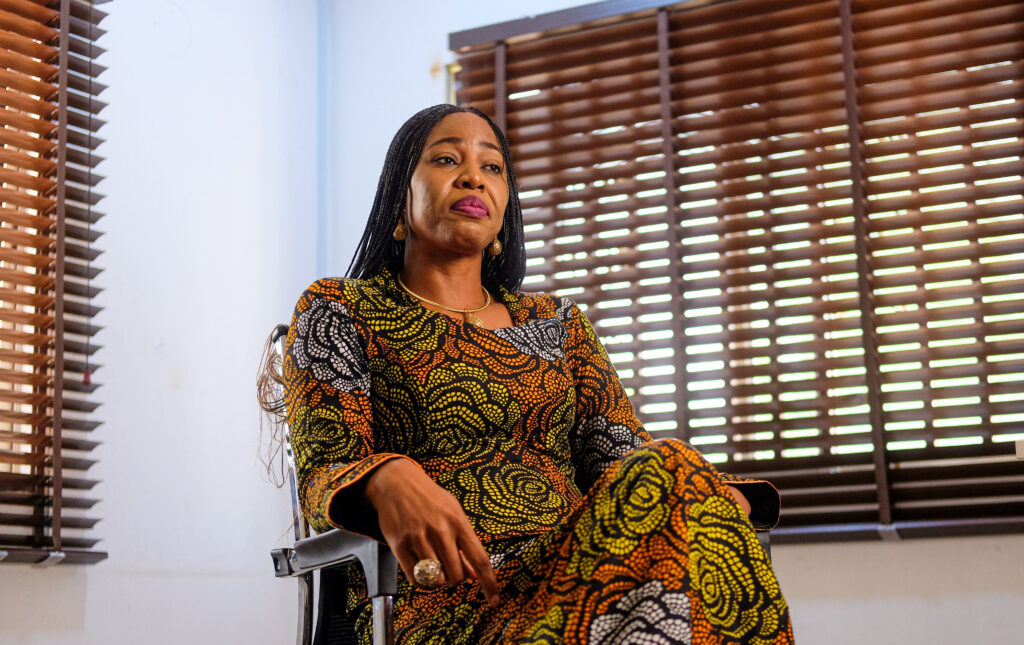
Nkechi Okenwa walked into her office, moving instinctively toward the window and pulled the blinds open. Outside, the city was already in motion: cars weaving through traffic, traders arranging their stalls, generators humming faintly in the distance. She paused for a moment and smiled quietly to herself. For Nkechi, energy had never simply been about electricity. It was about movement, opportunity, and the power to transform lives.
Long before she stepped into a university lecture hall, Nkechi said, she had been fascinated by the way a single switch could completely change the atmosphere of a home. Growing up in Nigeria, she watched how electricity brought light into dark rooms and how access to power allowed communities and businesses to function.
“As a teenager choosing the course of study, I had to take on electrical electronics engineering as a course,” she recalls. “Though I knew it was a male-dominated call, because I never saw any female studying that course… that’s actually how this whole journey started.”
When she finally entered university, the reality of that gender gap became impossible to ignore. In a lecture hall of more than 220 engineering students, only 12 were women — barely five percent of the class. The imbalance was intimidating, but it also planted the seed for a bigger mission.
“I said there has to be a way to, you know, get women inclusive.”
“I understand the challenges that come with a female being in this male-dominated industry, but when I look at myself and I can remember how I was able to go through, the challenges, my persistence, and all of that, I told myself it’s possible that so many other women too have aspirations to make a difference in their world and can also do this, so it made me start thinking of starting this organization.”
Years later, that determination evolved into two major ventures. Today, Nkechi serves as the CEO of Energy Excell Systems and Solutions and is also the founder of the Women in Energy and Economic Sustainability Initiative (WEESI), which is dedicated to integrating women into every level of the renewable energy sector.
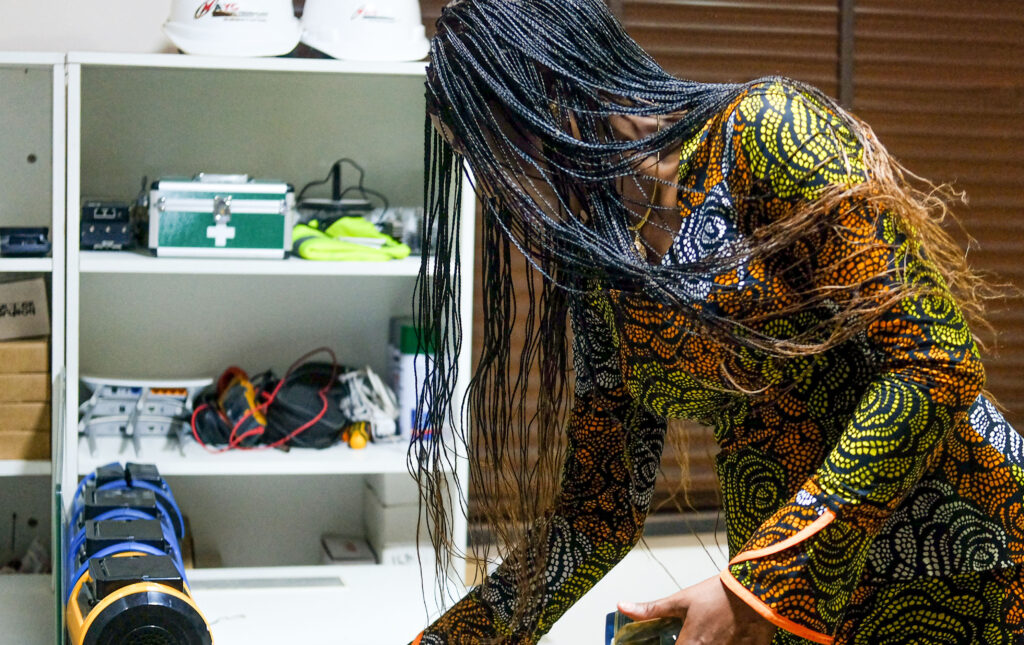
Nkechi Okenwa, CEO of Energy Excell Systems and Solutions, checking solar panel accessories in her store at CITEC Estate by Jabi-Airport Road bypass, FCT Abuja, Nigeria on April, 1, 2026. Photo: Jerry Ogbe, bird story agency
Her professional journey did not begin with entrepreneurship. After graduating, she started as a technical staff member at an IT company where she worked with power systems and tools like AutoCAD. Through workshops, conferences, and industry engagements, she became increasingly exposed to the renewable energy sector at a time when Nigeria was slowly beginning to embrace alternative energy solutions.
She later transitioned into a sales executive role before eventually building her own solar installation company.
Established in 2013, Energy Excell Systems and Solutions Limited operates as an indigenous Nigerian renewable energy social enterprise and Engineering, Procurement, and Construction (EPC) company. But beyond simply installing solar panels, the company focused heavily on what Nkechi describes as “productive use” energy.
The company provided homes, small businesses, and farming communities with energy-efficient appliances such as solar-powered rice mills, cassava graters, and grinders: tools capable of directly improving livelihoods and local economies.
As her business expanded, Nkechi noticed another problem that extended far beyond electricity access. Women remained largely absent from conversations around energy solutions, despite being among the most affected by energy poverty within communities.
“I looked at women, and I found that most challenges in the community that we face, we face them as men and women, but I find that women sometimes are not really included in solving these challenges, so I told myself I have to find a way to get women to across all levels.”
That realization led to the creation of WEESI in 2020. The initiative was designed to create pathways for women and girls across the energy value chain, from rural communities at the bottom of the energy pyramid to leadership spaces within the sector.
The organization strategically tailored its programs across different age groups. For girls and young women between the ages of 12 and 26, WEESI organized STEM essay competitions, mentorship programs, and scholarship opportunities aimed at nurturing early interest in renewable energy and engineering.
At the grassroots level, the initiative focused heavily on economic empowerment. Rural women, community entrepreneurs, and internally displaced persons (IDPs) received technical training in solar photovoltaic installation and maintenance while also learning sustainable clean cooking practices.
“We have carried out programs and trainings with women in the rural areas, ranging from telling them how to turn the waste in the community into energy, like making and manufacturing charcoal briquettes with the waste in the community. For example, a woman that threshes rice and has a heap of rice husk doesn’t even know what to do with it. Now, can decarbonize this rice husk into charcoal and make briquettes with them, and make profitable money from it?”
For many women, the impact of WEESI became life-changing.
Among them was Anita Manuel, an entrepreneur and contractor working with an oil and gas firm. Anita first encountered WEESI during its launch and immediately felt drawn to the organization’s mission.
“What drew me to the initiative is that their objectives aligned with my values and goals too, and I just wanted to expand my business,” Manuel said.
Through the training, Manuel learned practical skills in solar panel installation, energy auditing, and technical troubleshooting. More importantly, she began to see how her background in project management and civil works could fit into the renewable energy sector.
One moment, however, remained unforgettable.
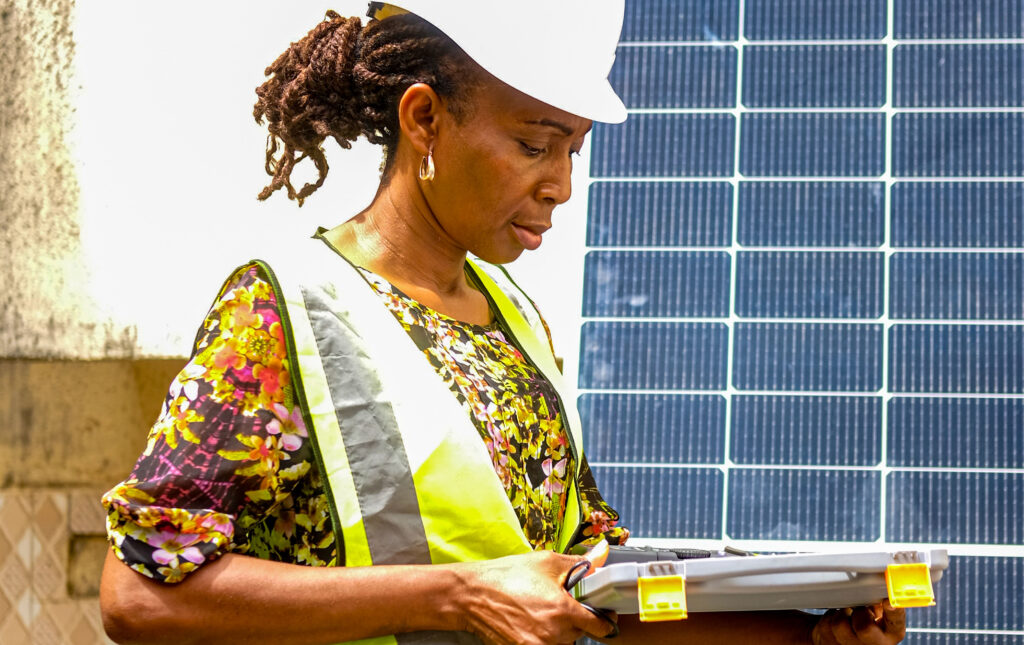
Anita Manuel, an entrepreneur and contractor checking solar panels at CITEC Estate by Jabi-Airport Road bypass, FCT Abuja, Nigeria on April, 1, 2026. Photo: Jerry Ogbe, bird story agency
The first time she participated in a successful solar installation that powered an entire building and activated a freezer became a defining experience. For Manuel, it was proof that the technical knowledge she had gained was not theoretical; it was transformative.
For Nkechi, her growing influence in the renewable energy space was a quieter battle many women in STEM continue to face: self-doubt and institutional bias.
Even after earning her engineering degree, she often questioned whether people would truly trust her expertise in such a male-dominated field.
“My fears were, are you sure that I’m going to do it right? Are you sure people are going to listen to me because I’m a woman?”
Those fears were reinforced repeatedly in professional spaces. Clients frequently walked into her office searching for a male engineer, assuming she could not possibly hold the technical expertise herself.
“So many times, a man will walk into my office and want to make inquiries about our products and services, and asking me, ‘Where is the technician here? Where’s the engineer here?’”
“And I said, ‘Sir, talk to me, I am the engineer.’ Even the way he approaches me and talks to me shows that he’s still not confident.”
Instead of retreating, Nkechi leaned deeper into her work, allowing technical excellence to speak louder than assumptions.
“With time, as I kept confronting my fears, as I kept going head-on with it, I, at least, have overcome those fears to a reasonable extent,” she says.
While stories like Nkechi’s reflect progress, Nigeria’s renewable energy sector still faces major structural challenges. High installation costs continue to limit adoption rates, while policy inconsistencies and poor-quality installations by untrained technicians have created skepticism around solar technology.
According to the International Energy Agency (IEA), nearly 600 million people across Africa still live without access to electricity, with sub-Saharan Africa accounting for the largest share of the global electricity access gap. It notes that expanding access to electricity in Africa will require rapid investment in mini-grids, solar systems, and decentralized renewable energy solutions, especially in rural communities where grid expansion remains limited.
For electrical and renewable energy engineer Eng. Ale Oluwafeyisayo Joy, Nigeria still lags behind countries such as Kenya and South Africa in renewable energy adoption.
“In Nigeria, I would say that we’re not yet in full adoption,” Joy assesses. “And that’s due to a couple of factors, as compared to countries like Kenya and South Africa that have been able to get it right in certain structural development, fatt running policies, and also clear pathways and finances.”
Still, she believes the future of renewable energy in Nigeria is inevitable.
“Solar is not an option; it’s actually a necessity. I believe it being that way means that in the nearest future, in the coming months and years from now, it will be something that we get very competitive in the market expansion.”
For Nkechi, that future is about more than market growth or technology adoption. It is about changing who gets to participate in building that future.
It is about ensuring that the next generation of girls entering engineering classrooms never feels out of place. It is about creating an industry where women no longer need to prove they belong before they are heard.
And somewhere inside her office each morning, as she stands by the window watching the world come alive, Nkechi continues building exactly that kind of future; one powered not only by energy but by inclusion, persistence, and possibility.
bird story agency