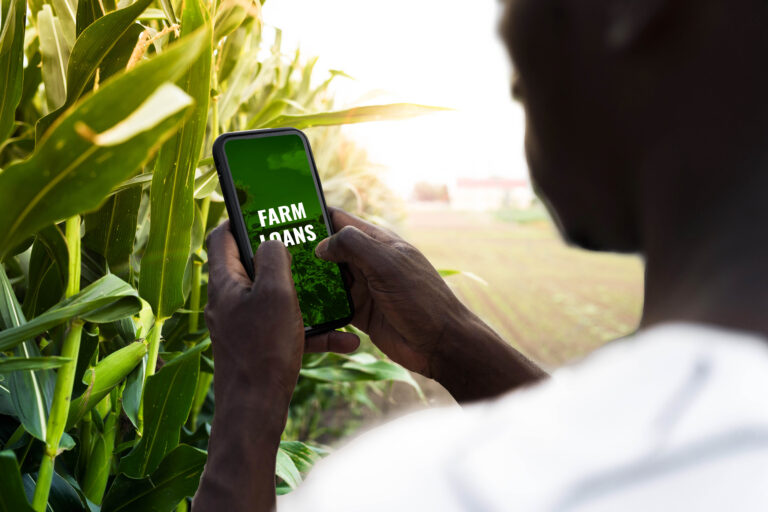
Three years after bird story agency first profiled his seaweed-based fertilizer initiative, Liberian agriculturist Ebenezer Doto Kukai is helping shape agricultural development from within government. In this conversation, he reflects on the journey from community innovation to public service and what it reveals about the opportunities facing Africa’s next generation of agricultural leaders.
Bonface Orucho, bird story agency
Three years ago, Ebenezer Doto Kukai was known in his community as the young agriculturist collecting seaweed from Liberia’s coastline and turning it into organic fertiliser for backyard gardens.
At the time, his work focused on helping urban households grow vegetables, reduce food costs, and adopt sustainable farming practices using locally available resources. Through community trainings and demonstration gardens, he introduced dozens of households and schools to organic food production, proving that innovation in agriculture did not always require expensive technologies or large-scale investments.
Today, Kukai’s journey reflects a broader transformation taking place within Liberia’s agricultural sector.
As the government pursues new investments to revitalise key value chains, including coffee, rice, and horticulture, a new generation of agricultural professionals is increasingly moving from community-led initiatives into positions where they can influence policy implementation, farmer support programmes, and agricultural development strategies.
Recent government efforts have attracted millions of dollars in agricultural investment, while partnerships with international institutions are expanding opportunities for training, technology transfer, and capacity building across the sector.
Kukai is part of that emerging cohort.
Now serving as a district agricultural officer with Liberia’s Ministry of Agriculture, he works directly with farming communities while helping implement agricultural programmes at the local level. He is also currently in China on an official agricultural training assignment, where he is studying modern farming systems, agricultural technologies, and approaches to value addition that could help strengthen food production and agribusiness development back home.
In this conversation he reflects on the journey from community innovator to public servant, the lessons learned from working with farmers, the opportunities he sees for young Africans in agriculture, and how international exposure is shaping his vision for Liberia’s agricultural future.
Q: You are currently in China on an official agricultural assignment. Tell us about your work there and what your day-to-day responsibilities involve.
Ebenezer Doto Kukai: I am currently in China through the Ministry of Agriculture as part of a professional agricultural training program.
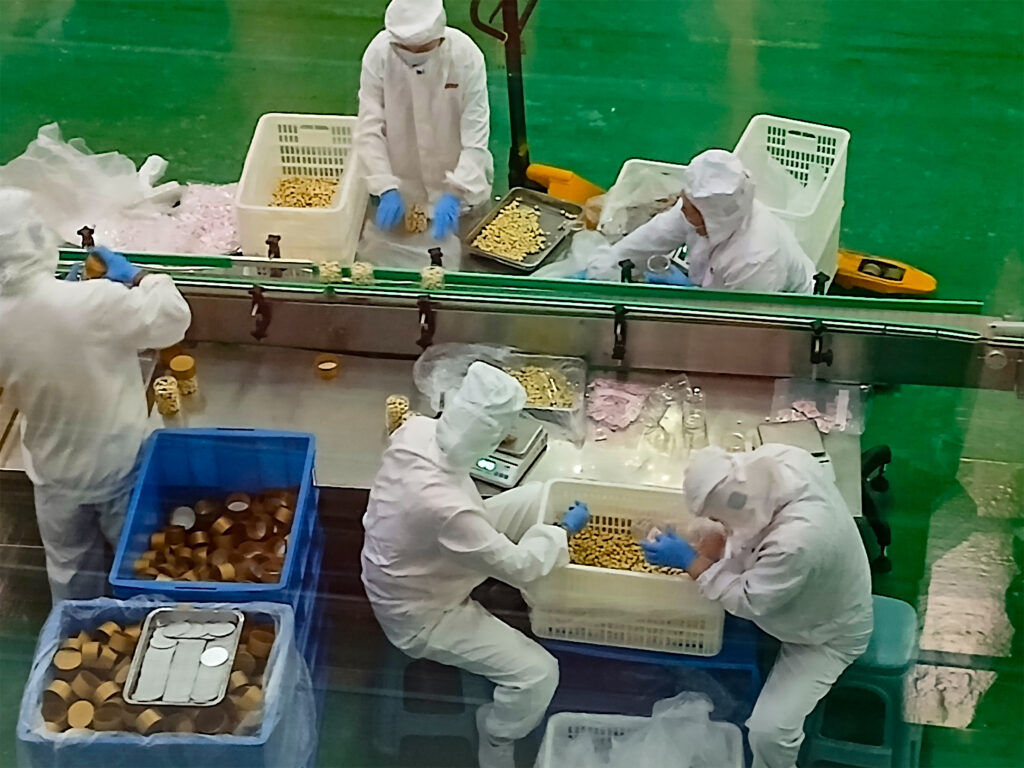
My daily activities include visiting agricultural research institutions, attending technical training sessions, touring commercial farms and agribusinesses, and studying modern farming technologies. The experience is helping me understand how research, innovation, mechanisation, and market systems work together to support food security and agricultural productivity.
What stands out most is how agriculture is treated as a complete value chain rather than simply crop production.
Q: When bird story agency first featured your work, you were collecting seaweed from Liberia’s coastline and turning it into organic fertiliser. What problem were you trying to solve at the time?
Kukai: The main challenge was access to affordable agricultural inputs.
Many smallholder farmers struggled with the cost of fertilisers, while soil fertility was declining in many farming areas. At the same time, seaweed was abundant along our coastline but largely ignored.
I saw an opportunity to convert a locally available natural resource into an environmentally friendly fertiliser that could improve soil health and support crop production. The goal was to create a solution that farmers could access without depending entirely on imported inputs.
Q: What convinced you that seaweed could become a viable agricultural input?
Kukai: My interest came from research.
I discovered that seaweed contains nutrients and biological properties that can improve soil structure, support plant growth, and strengthen crop resilience. What attracted me most was that it was freely available and renewable.
I believed that if farmers could learn how to use it effectively, it could become a low-cost input that supports both productivity and environmental sustainability.
Q: New ideas often face resistance. How did farmers react when you first introduced seaweed fertiliser?
Kukai: There was a lot of skepticism in the beginning.
Many farmers had never seen seaweed used as fertiliser before and questioned whether it would work. Some assumed that because it came from the ocean it could not benefit crops.
The only way to address those concerns was through demonstration. I established trial plots and home gardens, trained farmers, and encouraged them to observe the results themselves. Once people started seeing healthier crops and improved growth, acceptance increased significantly.
Q: Looking back, how important was that grassroots work in shaping your career?
Kukai: It was extremely important.
Working directly with communities taught me that agriculture is ultimately about solving practical problems. Farmers face challenges every day, and innovation only matters if it responds to those realities.
The experience also helped me develop leadership skills, community engagement skills, and a deeper understanding of the agricultural sector. It laid the foundation for everything that followed.
Q: How did that community work eventually lead you into government service?
Kukai: As I continued supporting urban and peri-urban farmers, I began interacting with officials from the Ministry of Agriculture and sharing some of the approaches we were using at community level.
At that time there were limited opportunities to integrate those ideas into government programmes. Later, when the current administration increased its focus on peri-urban agriculture and youth participation, I saw an opportunity to contribute.
I started by volunteering and sharing my experience. Over time, that involvement opened the door for me to formally join the ministry. Today I serve as a district agricultural officer working directly with farming communities.
Q: Has working inside government changed how you view agricultural development?
Kukai: Absolutely.
When you work at community level, you see individual challenges. When you work within government, you begin to understand the broader systems that influence agricultural outcomes.
I now have a deeper appreciation of how policy, infrastructure, financing, extension services, research institutions, and private-sector investment all affect farmers. Agricultural transformation requires coordination across all of these areas.
Q: Governments often face criticism over agricultural performance. From your experience, is some of that criticism justified?
Kukai: Some criticism is justified, but it is important to recognise that agricultural development is a shared responsibility.
Government has a critical role to play, but so do farmers, private businesses, development partners, researchers, and local communities.
The most successful agricultural systems are those where all stakeholders remain committed to long-term objectives and work together to achieve them.
Q: What has impressed you most about China’s agricultural system?
Kukai: The level of integration.
Agriculture is connected from production through processing, storage, logistics, packaging, and marketing. Technology is present at every stage.
One lesson that stands out is the importance of reducing post-harvest losses. In many African countries, farmers work hard to increase production but lose significant value because of inadequate processing and storage infrastructure.
China demonstrates how value addition can significantly increase agricultural incomes and efficiency.
Q: Based on what you are learning, where do you see the biggest opportunities for Africa?
Kukai: Africa has enormous agricultural potential.
We have land, natural resources, favourable climates, and a growing population. The challenge is not simply increasing production.
The bigger opportunity lies in processing, value addition, technology adoption, and stronger agricultural value chains. If we can address those gaps, agriculture can become a much stronger driver of economic growth and job creation across the continent.
Q: Many young Africans have innovative ideas but struggle to gain traction. What advice would you give them?
Kukai: Consistency is critical.
Many people give up because results do not come immediately. Innovation takes time. Building trust takes time. Creating impact takes time.
Young people should remain focused on their goals, continue learning, and stay committed even when progress seems slow. Opportunities often emerge after years of persistence.
Q: Looking back over the past three years, what has been the most significant turning point in your journey?
Kukai: Working directly with smallholder farmers.
That experience helped me understand agriculture from the farmer’s perspective rather than from theory alone. It strengthened my commitment to public service and reinforced the importance of practical solutions.
Everything that followed, including my current role, grew from that foundation.
Q: Do you still remain connected to your seaweed fertiliser initiative?
Kukai: Yes, very much.
Farmers continue to use the fertiliser and people still purchase it. We are also planning additional training programmes where the fertiliser will be distributed to smallholder farmers.
My responsibilities have expanded, but I have not abandoned the innovation that started my journey.
Q: Beyond your ministry role, what gives you the greatest sense of purpose today?
Kukai: Working with young people.
Agriculture needs a new generation of innovators, entrepreneurs, and professionals. Young people bring creativity, energy, and new perspectives.
Whenever I can help young people see agriculture as an opportunity rather than a last resort, I feel I am contributing to something meaningful.
Q: What is your long-term vision for Liberia’s agricultural future?
Kukai: I want to see more young people actively participating in agriculture and agribusiness.
Liberia has significant agricultural potential, but unlocking that potential will require investment in skills, technology, infrastructure, and leadership development.
If we continue empowering young people and strengthening agricultural institutions, I believe the sector can become a major driver of economic growth over the next two decades.
Q: Finally, when you reflect on the journey from collecting seaweed on Liberia’s coastline to representing your country abroad, what does that progression mean to you?
Kukai: It reminds me that meaningful change often begins with small actions.
The seaweed project started with curiosity and a desire to solve a local problem. Over time, it opened opportunities to serve communities, contribute to national development, and learn from agricultural systems around the world.
For me, the lesson is simple. Stay committed to creating solutions, remain consistent, and keep serving. You never know where that journey may lead.
bird story agency