Across Africa, digital innovations are giving expectant and new mothers ways to navigate pregnancy. Sòláyò AI is Nigeria’s latest entry into the field.
By Joy Onuorah, bird story agency
As Rukayat Yunusa’s pregnancy proceeded, she began to wonder about the changes in her body, such as the color of her urine, food cravings, as well as sleeping positions and swelling legs. The first-time mother in Lagos wanted to know what she should and shouldn’t consume, but certain questions were too difficult to discuss during a consultation.
Yunusa found a place to ask her questions comfortably, through Sòláyò AI, a maternal health support service available on WhatsApp.
“It answers the questions that I can’t even ask a doctor because of how silly it sounds,” she explained.
Yunusa discovered the service four months ago when a team from the Whatsapp-based service visited the main healthcare center in Meiran, which is located along the Lagos-Abeokuta expressway. During an outreach program, they chatted with women about maternal health and demonstrated the AI tool.
She tried it on her husband’s phone when she returned home and has been using it ever since.
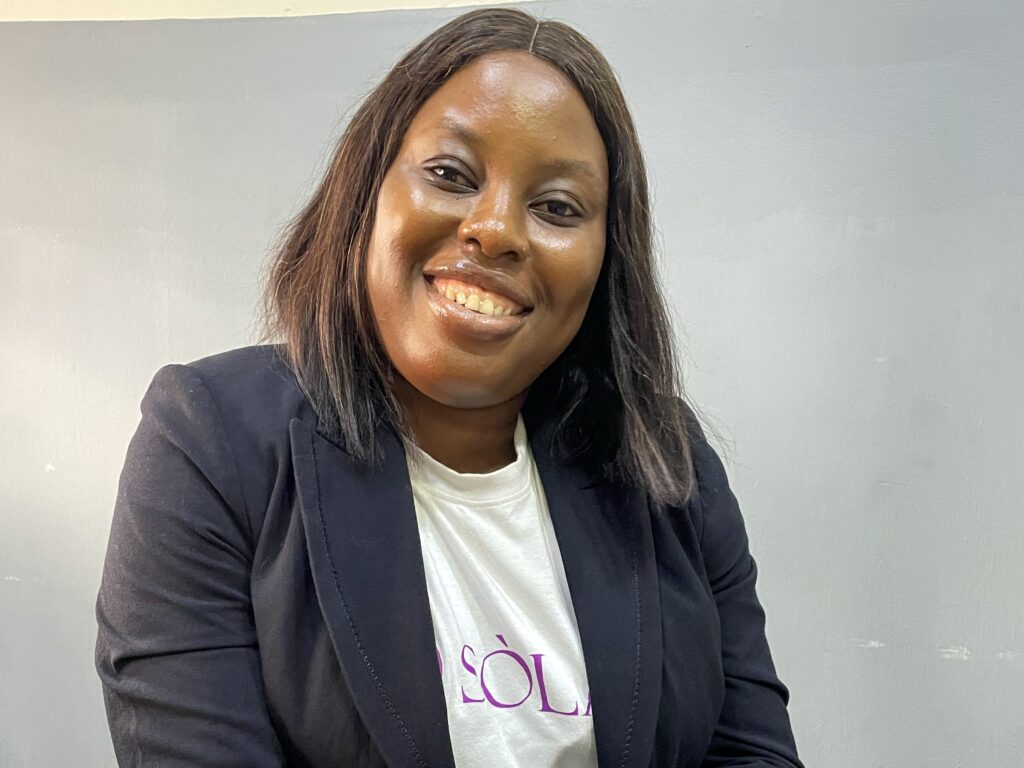
Sòláyò AI was developed in 2025 by co-founders Theresa Omowunmi Oyewole, its chief operating officer, and Damilola Oladiipo, to help women who are trying to conceive, pregnant, or have recently given birth.
The app includes automatic solutions to maternal health issues, professional consultations, and a separate forum where women may share their experiences. Its founders are also working on multilingual functionality to reach women who prefer to communicate in their native language.
The demand for adequate maternal health care is reflected in the overall health data. According to UNICEF and other UN agencies’ April 2025 estimates, Sub-Saharan Africa accounted for around 70% of worldwide maternal mortality in 2023, with 454 maternal deaths per 100,000 live births.
According to a report by WHO, Nigeria had the highest number of maternal deaths and accounted for more than a quarter (28.7%)of all estimated global maternal deaths in 2023, with approximately 75,000 deaths. Many of these deaths were preventable, through timely, quality healthcare.
Oyewole’s interest in maternal health began when she sold baby products in Idumota Market before transitioning into healthcare business development.
“That was my initial exposure to the maternal journey,” she said. “I came to understand how stressful and difficult the process can be and how much support women need before, during, and after pregnancy.”
Over the course of seven to eight years in the industry, she met ladies who were struggling to conceive, first-time mothers looking for reassurance, and women who were having postpartum troubles. Their queries and worries made her recognize the importance of assistance beyond the goods she sold.
Her discussions about maternity products with Oladiipo, who subsequently became her co-founder, reminded him of his childhood. Oladiipo’s mother had been a matron at a teaching hospital and oversaw a maternity center.
“Growing up, I used to go around with her to assemble packages for mothers,” Oladiipo said.
He then worked in branding, marketing, and communications for technology companies in transportation, events, and healthcare. When he and Oyewole first discussed starting a business together, they envisioned a platform where women could acquire pregnancy necessities from their phones.
Their initial strategy brought together commerce, education, and community support, connecting merchants with customers. However, the firm did not provide the desired results, causing them to reevaluate their approach.
Further research turned their focus away from product supply and toward addressing women’s questions. Oyewole added that they recognized that women required information in between appointments and outside of usual healthcare hours, when they may be unsure about a symptom or whether to seek medical assistance.
“We enable women to access vital health information the exact moment they need it,” she said.
Oladiipo says the name means “safe delivery” in Yoruba. They chose WhatsApp since women already utilized the chat network and did not need to download another app.
“It is a conversational platform,” Oladiipo said. “A user simply sends a message saying ‘Hi.’”
The system asks a user for her identity and authorization before determining if she is attempting to conceive, pregnant, or a new mother. Pregnant users specify an expected delivery date to help personalize responses to their stage of pregnancy. They can then ask questions and obtain answers via the chat.
The service evolved in response to users’ requests for more than automated answers. They initially did not incorporate direct professional consultations into the automated process.
“Initially, we did not include direct professional consultations within the automated flow,” Oladiipo said. “However, user feedback showed that women feel significantly more secure when they know a real human professional is accessible.”
Users can schedule consultations through the platform. According to Oladiipo, the company also maintains a separate WhatsApp community with over 20 medical specialists in it. Mothers can use this community to ask common inquiries and share their experiences.
The founders are building multilingual functionality to accommodate women with varying levels of formal education as well as those who choose to communicate in their native language. The feature is not yet available, therefore language accessibility remains an area that the organization must solve.
Sòláyò faces a more fundamental challenge: ensuring women understand the limitations of AI-generated health information. A response that is appropriate for a normal query may not be adequate when a symptom necessitates immediate professional evaluation.
Oladiipo referred to the platform as an information companion rather than a diagnostic tool. He stated that medical specialists help to update the system, and that specific phrases connected with high-risk conditions prompt advice to seek professional care.
“When a user inputs terms indicating red-flag symptoms or high-risk conditions, the system automatically triggers a recommendation to connect directly with a qualified medical professional,” he said.
Sòláyò AI is one of several digital inventions aimed at improving maternity healthcare in Africa. In Kenya, a 2025 trial of the PROMPTS maternal-health messaging platform including 6,139 expectant women discovered moderate improvements in maternal-health awareness, delivery readiness, and newborn-care practices, illustrating how digital tools can supplement professional treatment.
In a 2025 pilot study of Mwana, an AI-powered messaging app conducted with postpartum women in Lagos, 57% of respondents gave it the highest rating for usefulness.
Omolara Owojuyegbe, the health education officer for Agbado-Okeodo in Alimosho Local Government, met the founders during an outreach program at the Meiran Center. She stated that the program includes assessments, medication help, and discussions about the company’s products and artificial intelligence (AI).
“I took time to check it out,” she said. “I saw that it will be very helpful for women generally.”
Owojuyegbe saw promise in the service for women who were trying to conceive, pregnant, or had recently given birth. She did, however, emphasize that women with health issues that require clinical attention should go to a healthcare center or hospital.
Oladiipo reported that Sòláyò reached over 15,000 women through education, community groups, and outreach. The figure includes women engaged through activities other than the AI service itself.
As Yunusa moved about her business at home, she saw the usefulness of the program as having somewhere to turn when issues arose between consultations, particularly ones she found difficult to ask a doctor.
“Ever since, it’s been like a companion to me,” she said.
Ends.