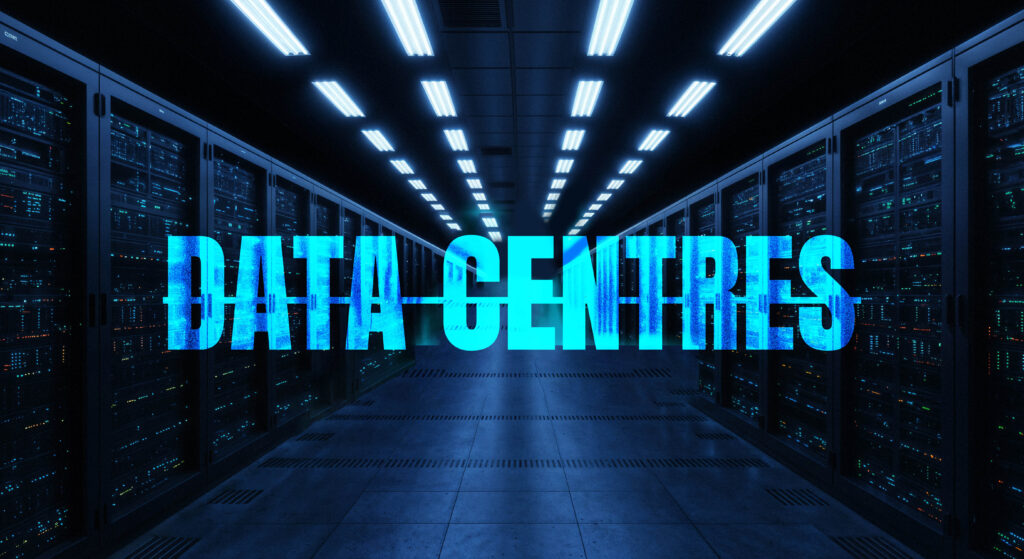
Africa’s digital infrastructure is entering a new phase of large-scale investment in AI-ready, high-performance computing facilities. From Nigeria’s Lekki corridor to South Africa, Morocco, and East Africa, new data centers are being built as compute-first hubs powering cloud, AI, and data-heavy workloads within the continent.
Bonface Orucho, bird story agency
A recent unveiling of a 100 MW AI-capable hyperscale data center in Nigeria’s Lekki corridor is expected to begin commercial operations this month.
The facility, developed by Kasi Cloud, is coming online just weeks after Cassava Technologies launched Africa’s first AI factory in South Africa, placing both developments within a short window that is expanding the continent’s high-performance computing capacity.
According to a Nairobi-based sector analyst, Owen Mbita of the Kenya National Innovation Agency (KeNIA), “what we are seeing is a structural shift from storage-led infrastructure to compute-led ecosystems.”
“Processing power, not just data hosting, is becoming the primary driver of investment,” he shared on a call.
Kasi Cloud joins a growing pipeline of large-scale compute infrastructure projects that are reshaping Africa’s technology landscape, as investment shifts from basic hardware assembly toward higher-value digital infrastructure.
According to the company, the facility is a US$250 million campus, built over four years and designed to scale up to 100MW of capacity, far exceeding most existing facilities in Nigeria.
Its initial phase, starting at 5.5MW, forms part of a broader system engineered for high-performance computing, cloud services, and artificial intelligence workloads.
Located on a 42-hectare site in Maiyegun, Lekki, the facility introduces infrastructure designed for AI from the outset, reflecting a shift toward compute-intensive environments.
Unlike conventional data centers in Nigeria, which typically support rack densities of between 5 and 10 kilowatts, the new campus is built to handle between 10 and 100 kilowatts per rack.
Nigeria’s current data center landscape includes about 22 facilities spread across Lagos, Abuja, Kano, Enugu, and Rivers State.
Most of these are colocation sites hosting enterprise servers, while a smaller number support disaster recovery and telecommunications services.
Total installed capacity across these facilities is estimated at roughly 20MW, placing the Lekki campus among the largest single additions to the country’s compute infrastructure.
The project is backed by the Nigeria Sovereign Investment Authority, linking digital infrastructure expansion to national efforts aimed at strengthening local data processing capabilities and supporting economic diversification.
Across Africa, similar investments are accelerating, with multiple large-scale projects announced or expanded within weeks of each other.
In April 2026, Equinix committed approximately US$438 million to expand its data center footprint in South Africa, securing land for an additional 160MW of capacity.
This adds to hundreds of megawatts already operational or under development across the continent, reinforcing South Africa’s position as a core infrastructure hub.
In the same month, Morocco secured a US$1.2 billion AI data center project led by an international consortium including Nvidia.
The facility, planned for Casablanca, is expected to start at 40MW and scale up to 500MW, targeting sovereign AI computing services across Africa, Europe, and the Middle East.
“These are not isolated investments,” Mbita says. “They are part of a coordinated build-out of sovereign compute capacity, where countries are positioning themselves as regional processing hubs rather than just connectivity endpoints.”
These developments are adding to a pipeline of investments that is rapidly expanding Africa’s data infrastructure base.
The continent’s data center market is projected to grow into a multi-billion dollar segment, with estimates placing its value between US$6 billion and US$8 billion.
Growth is being driven by rising demand for cloud services, artificial intelligence workloads, and data localization requirements across both public and private sectors.
In individual markets, the trajectory is becoming more defined, with Kenya’s data center market projected to generate more than US$100 million in revenue by 2027.
At the same time, infrastructure expansion is increasingly taking a networked approach, linking facilities across multiple countries.
Pan-African operators are building distributed systems that allow data to be processed and stored within the continent, reducing reliance on offshore routing.
This shift supports the emergence of a more resilient and locally anchored digital ecosystem, capable of handling growing volumes of data traffic and compute demand.
“Energy is now the binding constraint,” Mbita explains. “The next phase of data center expansion in Africa will be determined less by capital availability and more by access to reliable, scalable power systems.”
Power supply limitations and connectivity bottlenecks continue to slow the pace of expansion in several markets, even as demand for compute infrastructure rises.
The development comes as the global personal computer market enters a new upgrade cycle driven by artificial intelligence.
AI-enabled PCs are projected to account for 31 percent of global shipments in 2025 and more than half of the market in 2026, according to Gartner.
Total AI PC shipments are expected to reach approximately 143 million units in 2026, reflecting the rapid integration of AI capabilities into end-user devices.
Worldwide PC shipments have also rebounded, reaching 71.5 million units in the fourth quarter of 2025, a 9.3% increase year-on-year.
For the full year, shipments surpassed 270 million units, up 9.1 percent, indicating renewed momentum in global hardware demand.
Despite this expansion, most organizations are upgrading hardware to maintain compatibility with emerging AI systems rather than deploying advanced AI workloads directly on devices.
Large-scale processing continues to rely on centralized infrastructure, including data centers and cloud platforms, which provide the computational capacity required for training and running AI models.
In this context, recent investments across Africa are concentrating on the infrastructure layer rather than end-user devices.
Facilities such as the Lekki campus are being designed for continuous, high-density processing, supported by advanced power and cooling systems.
Sector analysts note that the combination of data infrastructure, energy systems, and connectivity is creating the foundation for a distributed compute layer across the continent.
Rather than relying solely on external infrastructure, African markets are increasingly hosting and processing data locally, supporting a range of digital services and applications.
“This is ultimately about control of the value chain,” Mbita adds. “Countries that host compute infrastructure will capture more value from AI, cloud services, and digital trade, compared to those that remain dependent on offshore processing.”
Beyond Nigeria, similar developments are underway across multiple markets, driven by both private capital and institutional backing.
Cassava Technologies is deploying AI-focused infrastructure in partnership with Nvidia, introducing GPU-powered environments designed to support AI model training and deployment across countries including South Africa, Kenya, Nigeria, Egypt, and Morocco.
These facilities integrate data center capacity with high-performance computing resources, expanding access to advanced processing power within African markets.
South Africa remains a central node in this transition, supported by an established data center ecosystem and ongoing investment in advanced manufacturing and digital technologies.
In East Africa, infrastructure development is expanding alongside broader digital ecosystem growth.
Kenya and Rwanda are investing in data infrastructure and digital services, while Uganda is advancing plans for a sovereign AI supercomputing facility aimed at strengthening regional processing capacity.
Energy is emerging as a critical factor in this transition, particularly for hyperscale facilities requiring continuous, high-load operations.
A 100MW facility operating at full capacity could consume up to 876,000 megawatt-hours annually, placing significant pressure on national grids.
Nigeria’s grid capacity, which fluctuates between 4,000 and 5,000MW for a population of more than 200 million, presents structural constraints for large-scale infrastructure deployment.
“Data center operators may have to rely on embedded power systems or backup generation to maintain operations… Water and cooling systems are also a key part of infrastructure design, particularly for high-density computing environments,” according to Mbita.
bird story agency
Useful links for editors:https://urbangeekz.com/2026/02/nigerias-250m-ai-ready-data-centre-to-begin-operations-in-lagos-later-this-year/, https://www.moroccoworldnews.com/2026/04/286115/gitex-africa-2026-africas-largest-data-center-in-dakhla-to-propel-moroccos-digital-sovereignty/, https://www.connectingafrica.com/data-centers/digital-realty-ixpn-launch-new-internet-exchange-pop-in-nigeria, https://capacityglobal.com/news/equinix-south-africa-ai-data-centre-boom/,https://www.kasicloud.com/