East Africa’s private capital market is entering a more structured phase, with debt, exits and real-economy sectors increasingly shaping how capital is deployed. Venture funding still plays a role, but investors are leaning more toward cash-flow-backed deals and structured instruments.
Bonface Orucho, bird story agency
East Africa’s private capital market is moving into a more layered phase, where private debt, agribusiness finance, and structured transactions are taking a larger role alongside venture equity.
The shift is more about how capital is being assembled, priced, and deployed across sectors tied to production and cash flow.
According to the latest report by the African Private Capital Association, East Africa attracted US$4.1 billion across nearly 500 private capital deals between 2021 and 2025, with deployment more than doubling since 2022.
In 2025 alone, deal value rose 75% year-on-year to US$1.2 billion, placing the region as Africa’s second-largest private capital market by value. Venture capital still accounted for about 60% of deal volume over the period, but the mix is moving toward more structured instruments and tighter pricing.
AVCA states in its 2026 investor sentiment work that “private credit is becoming increasingly central to African private capital portfolios as investors adjust to tighter global liquidity conditions.”
The change in East Africa is increasingly visible in what gets funded.
Private debt accounted for more than one-third of Africa’s transactions in 2025, according to AVCA, with activity concentrated in agribusiness, financial services, and energy-linked value chains.
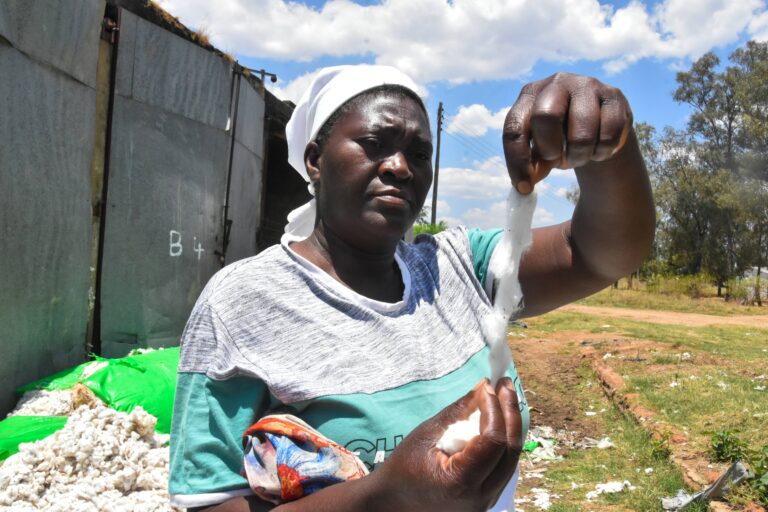
Agriculture made up 17% of regional deal volume over the past five years. Value remains lower, reflecting smaller ticket sizes and the structure of agricultural financing rather than limited investor appetite.
That gap is increasingly being filled through structured lending rather than equity. Financing is being tied to receivables, inventories, export contracts, and supply-chain flows rather than standalone farm or SME equity positions.
The African Development Bank has framed this constraint more broadly, stating the need to “deepen domestic capital markets and expand long-term financing instruments to support structural transformation.”
That framing is visible in East Africa’s agribusiness financing market, where credit is increasingly structured around cash cycles rather than traditional balance-sheet lending.
Warehouse receipt financing, invoice discounting, and supply-chain credit are becoming more common across agricultural processors and exporters, particularly where repayment can be anchored to predictable trade flows.
Exit activity is also changing the rhythm of the market.
East Africa recorded the continent’s fastest exit growth, with nearly 40% of 2024–2025 exits completed within four years, according to AVCA. That signals faster capital recycling compared to earlier cycles.
The IMF has noted that “many African financial systems remain dominated by banks, with underdeveloped capital markets limiting long-term financing.”
That constraint still shows up in exit routes, which remain uneven and largely dependent on strategic acquisitions rather than deep public markets. Even so, capital is moving through the system more quickly than in previous cycles.
Kenya continues to dominate East Africa’s private capital flows, accounting for 61% of deal volume and 87% of deal value in 2025, according to AVCA.
But capital is extending beyond Nairobi. Uganda and other frontier markets are drawing more structured investment, particularly in agriculture, financial services, and regional logistics. The East Africa Venture Capital Association has noted that “East Africa remains the most active private capital sub-region in Africa, but activity continues to be heavily concentrated in Kenya.”
The shift underway is not decentralization but a widening of investment corridors tied more to sector opportunity than geography alone.
The structure of the market is also being shaped by a growing focus on long-term capital providers.
At AVCA’s 2026 investor discussions in Nairobi, private credit, liquidity pathways, and domestic institutional participation featured prominently, reflecting a move in attention from deal flow toward market structure and capital sustainability.
The World Bank has stated that “mobilizing private capital at scale requires addressing perceived and real risks through guarantees, blended finance, and risk-sharing instruments.”
That framing is increasingly relevant in East Africa, where pension and insurance assets are expanding but allocations to private markets remain limited relative to global benchmarks.
The constraint is not capital stock, but allocation depth and risk structure.
Larger strategic capital flows are also shaping the upper end of the market.
Equity Group Holdings is expanding through acquisitions in Angola, Zambia, and Mozambique, extending its regional footprint beyond East Africa.
Arise Integrated Industrial Platforms is targeting more than US$3 billion in Kenyan industrial and infrastructure investment over the next five years, focused on manufacturing and logistics-linked assets.
At the same time, Airtel Africa delayed the listing of its mobile money business to the second half of 2026, citing market conditions and cost pressures. The delay reflects continued sensitivity of exit markets to global liquidity conditions, even as underlying transaction activity strengthens.
The IMF’s assessment of African financial systems as bank-dominated still holds, but it now sits alongside the gradual expansion of non-bank financing channels that are beginning to fill structural gaps in long-term funding.
bird story agency
Useful links for editors:https://www.avca.africa/data-intelligence/research-publications/2025-east-africa-private-capital-activity-report, https://www.avca.africa/data-intelligence/research-publications/investors-sentiment-outlook,https://www.worldbank.org/ext/en/development-topics