Alassane Samoura founded his water museum to inspire answers to issues around water and climate. Almost twenty years later, the discussions are even more critical.
Ndengar Masbé, bird story agency
“We are at the crossroads of climatic and hydro uncertainties. We must find answers,” said Burkinabe anthropologist and sociologist, Alassane Samoura, when he founded his Water Museum, the first of its kind in Africa, back in 2005.
The purpose of the museum, which aims to educate and raise awareness among young people about the value, management and heritage of water, is even more critical now than it was then.
Any visitor who arrives at the museum is first greeted by a bowl or cup of water. This symbolizes one’s acceptance in this place. Then follows a tradition which consists of planting a tree. Once the tree is planted, it is protected by a fence and then watered. This task is accomplished by the visitor under the watchful eye of the founder.
After this step, the guided tour begins, with explanations from the founder.
“The first technique is that of the divining rod. The stick is cut in the shape of the letter Y. Then we hold it on both ends by closing the palms while walking slowly because water likes tranquillity and calm,” Samoura shared while demonstrating the divining procedure.
“When you arrive above groundwater, the stick begins to turn on its own. In addition to this method, there is also the egg technique. Just take an egg in your palm while moving slowly and once you get on top (of) a water source, the egg will lift up on its own. It thus indicates the presence of groundwater,” the museum founder shared, adding that he is aware of some fifteen different indigenous groundwater detection techniques.
Located in Loumbila, some twenty kilometres from Ouagadougou, the water museum occupies an area of ten hectares.
Samoura said that after 25 years of experience as a sociologist and anthropologist, working for NGO’s and in hydraulic projects and programmes, he decided to create the museum in order to draw attention to the problem humanity has with water.
“Man’s first need is water, not agriculture or livestock. The state, associations and NGOs must seriously take into account the question of water,” he said.
For Samoura, the museum is meant to act in the same way that a university addresses intellectual questions.
“The water museum is not only a museum for exhibiting objects, but it is a museum for questioning, anticipating and thinking.”
“It is an atypical, innovative and participatory museum where we talk about major water issues and aim to provoke reflection on the issue of water,” Samoura explained.
According to Samoura, the average rural Burkinabe woman travels 5 kilometres to obtain water. A distance that he considers “enormous and tiring”. He therefore committed to reducing this water chore in order to relieve women.
According to the United Nations, some 2.2 billion people around the world lack safely-managed drinking water.
Samoura chose the location of his museum carefully. With a mild climate and fresh air, the space, which is full of birdsong and offers beautiful views, is meant to inspire introspection and a heightened awareness of the environment, including the country’s crucial waterways.
“Waterways must be protected, there are actually more plastic bags than fish,” Samoura lamented.
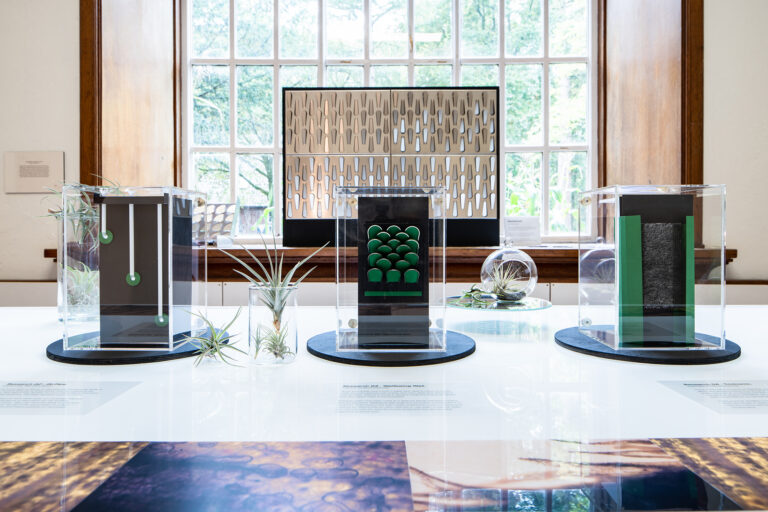
The museum displays objects and utensils for collecting water such as scoops, gourds and wineskins, which constitute a material heritage, while songs, poetry, myths, tales, and proverbs offer an intangible, but just as important heritage that recognises the importance of the environment.
“I was pleasantly surprised by all these discoveries, my children and I really loved this visit,” said one visitor who declined to be named.
An eclectic collection of water-related objects includes a Second World War-vintage barrel which was used to fetch water for troops at the frontline and in the “Pump Park”, a 1932 era water pump, a fire hydrant pump, a wind pump, a solar pump and a pump whose image is on the 10 West African CFA franc coin.
The museum attracts school visits from across the region.
“Children sang and danced songs and danced in the mud. They discovered and appreciated the water well and the ancient water pumps in the Parc des Pompes [Pump Park] pavilion. They also learned good practices for promoting hygiene and sanitation,” said Burkina Faso artist Zabda after visiting the museum with members of his association and 200 students.
Samoura now wants his museum to inspire a water-focused university that can have a global impact.
bird story agency
Useful link for editors: https://news.un.org/en/story/2019/06/1040701
This story was first published by bird story agency on October 16, 2023: https://bird.africanofilter.org/stories/the-water-museum?locale=en