Eswatini’s tourism sector attracts tourists to the yearly Umhlanga Reed Dance and the country’s numerous natural attractions. However, as the kingdom looks outside to attract more tourists, more young Emaswati are shifting their attention inside, exploring the mountains, woods, rivers, and cultural treasures within their own borders.
By Nokukhanya Musi, bird story agency
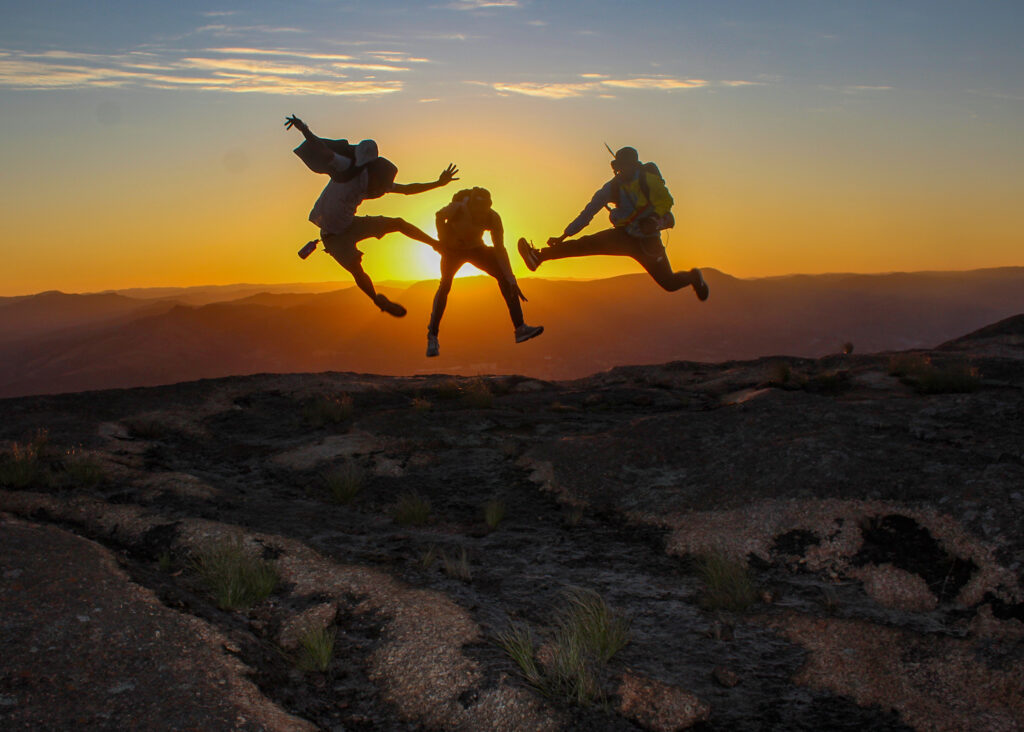
Thabiso Nxumalo carefully ascends a rocky mountain trail, stopping occasionally to collect his breath and enjoy the expansive views of Eswatini’s highlands and valleys. From dense forests to open plains and far-off mountain ranges, the scenery has something fresh to offer at every turn. The 34-year-old environmentalist and visual artist has visited about 20 trekking locations around the country in an effort to find locations worth exploring.
Nxumalo, from Siphofaneni in eastern Eswatini, started hiking with his friends during his tertiary studies. In 2014, he and three friends began taking annual hiking and camping adventures. Over time, repeating familiar routes made him crave a fresh challenge.
“After consecutively hiking in three different hiking destinations for a month I got used to the trails. I later challenged myself on the next hike to start on a new trail or destination,” he says.
That decision resulted in a goal of visiting 30 destinations in 12 months. He didn’t accomplish all 30, but he did hike to 20 of them and discovered that the challenge was about more than distance or numbers.
Domestic tourism is a significant component of Africa’s travel economy. In June 2026, the World Travel & Tourism Council stated that domestic travel accounted for around 61% of total tourism spending across the continent. In Eswatini, young people exploring the country’s hiking routes are also bringing attention to local attractions, demonstrating how local adventures may be integrated into a larger tourism culture.
Nxumalo began hiking during a difficult period in his life.
“I was on the verge of a breakdown at the time when I began hiking, due to some circumstances or events in my life that were causing me to feel emotionally and mentally down,” he says.
He describes a change in how he feels after spending time on a trail.
“When I’m out there, it’s like my mind just changes. I don’t think as much, and I start to feel the air around me, I feel the trees, I feel the path, I feel everything, and by the end I feel different, I feel lighter, I feel happier. There’s something about hiking that makes your brain feel that way,” he explains.
New locations have exposed him to local histories, cultures, people, climates, and vegetation. He remembers the view from the top of Mdzimba Mountain and deciding to hike down Sibebe Rock instead of taking his normal route.
“As a liSwati, you should know the mountains and rivers around you because they form the natural boundaries of our country,” he says.
A 2025 World Health Organization school-based study indicated that one in every four adolescents aged 13 to 17 had seriously pondered suicide in the previous 12 months, emphasizing the importance of social support among young people in Eswatini. Almost one in every four people attempted suicide during the same time period, and 43.4% stated their parents or guardians rarely or never understood their difficulties and concerns.
Clinical psychologist Celeste Jacobs Richards believes that social support and outdoor activities might help young people deal with mental distress.
“Nature helps ease the body’s reaction to stress and clears the mind. Naturally, the parasympathetic nervous system can be stimulated as well, helping to calm the body,” she says. “In all honesty, its more affordable than formal mental health services, where some individuals may feel uncomfortable or embarrassed sitting face to face with a mental health professional right away discussing their personal issues,” she points out.
However, she warns that, while outdoor activities might help with emotional well-being, they are not a substitute for professional mental health care, especially for young people who are experiencing severe or persistent emotional discomfort.
“Hiking promotes the wellbeing, but is not mental healthcare,” she explains. Professional help is needed when symptoms are severe, persist for an extended period or interfere with daily functioning.
Nxumalo’s experience reflects a broader interest in outdoor activities among young Emaswati. Bheki “Bisto” Mamba, a hiking organizer with Bahambi Hikes, said interest increased when COVID-19 limitations were lifted, when people began seeking outside activities after spending long periods of time indoors.
“More young people are now actively looking for outdoor experiences that combine physical activity, adventure, social interaction and mental wellness,” he says.
According to Mamba, social media has helped young people locate hiking routes. Bahambi Hikes began in April 2024, with eight people. Its regular treks now attract between eight and fifteen individuals, while popular routes and public holiday expeditions bringing 35 to 50 people.
The group consists of students, young professionals, businesspeople, fitness and outdoor enthusiasts. The Eswatini Tourism Authority reported 562,920 visitors in the first half of 2026, representing an 8.3% increase over the same time in 2025.
Participants join for exercise, friendship, adventure, or an escape from their work and everyday routines. According to Mamba, hikers also help each other complete routes.
Mamba believes that as participation develops, hikers are searching for longer routes and multi-day adventures to less-visited places, rather than the best-known trails.
Popular places include Malolotja Mountain Wilderness, the Makhonjwa Mountains near Bulembu, Ngwempisi Gorge, Mdzimba, Zombodze, Mantenga, Sheba’s Breast, the Ngwenya and Ezulwini mountains, and Sibebe.
Access remains a barrier. Some trails are difficult to access without reliable public transportation, and entrance fees, meals, safety concerns, and equipment expenditures may prevent some young people from participating. Mamba believes that hiking groups can help by planning outings and offering instruction and safety information.
The groups can also draw attention to cultural sites that would otherwise receive less traffic. Bahambi Hikes recently led a group of about 30 hikers to the Bushman Art Site at Bulunga, bringing them to a location that many would not have explored on their own.
“It is not always necessary to go out of the country to have an adventure. There are no shortage of amazing places to visit here in Eswatini,” Mamba says.
For Nxumalo, the challenge has helped him see his country as a place worth exploring. After exploring the paths on foot, he intends to take up cycling and discover new ways to discover Eswatini.
bird story agency