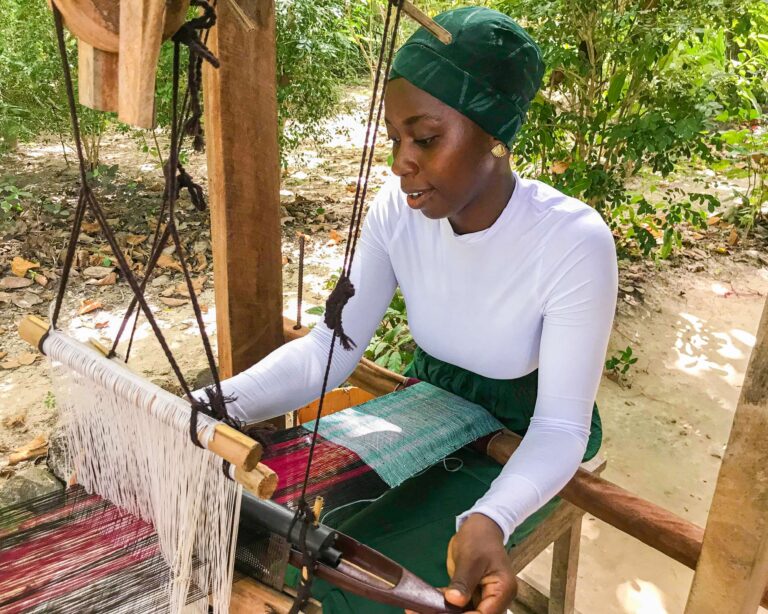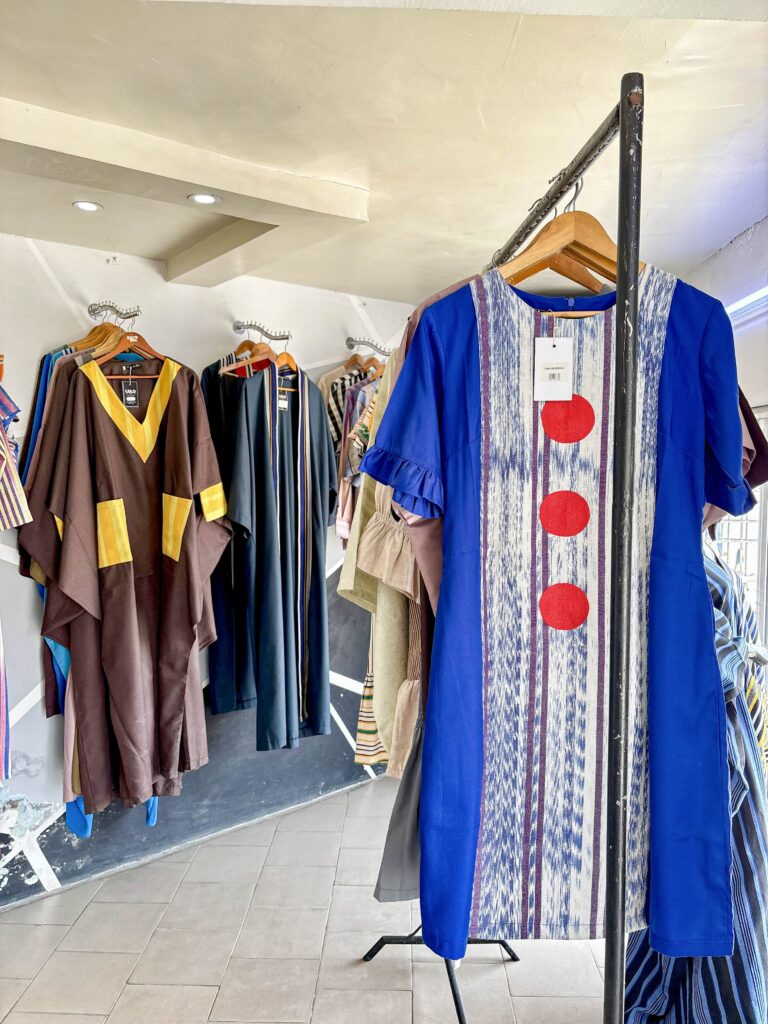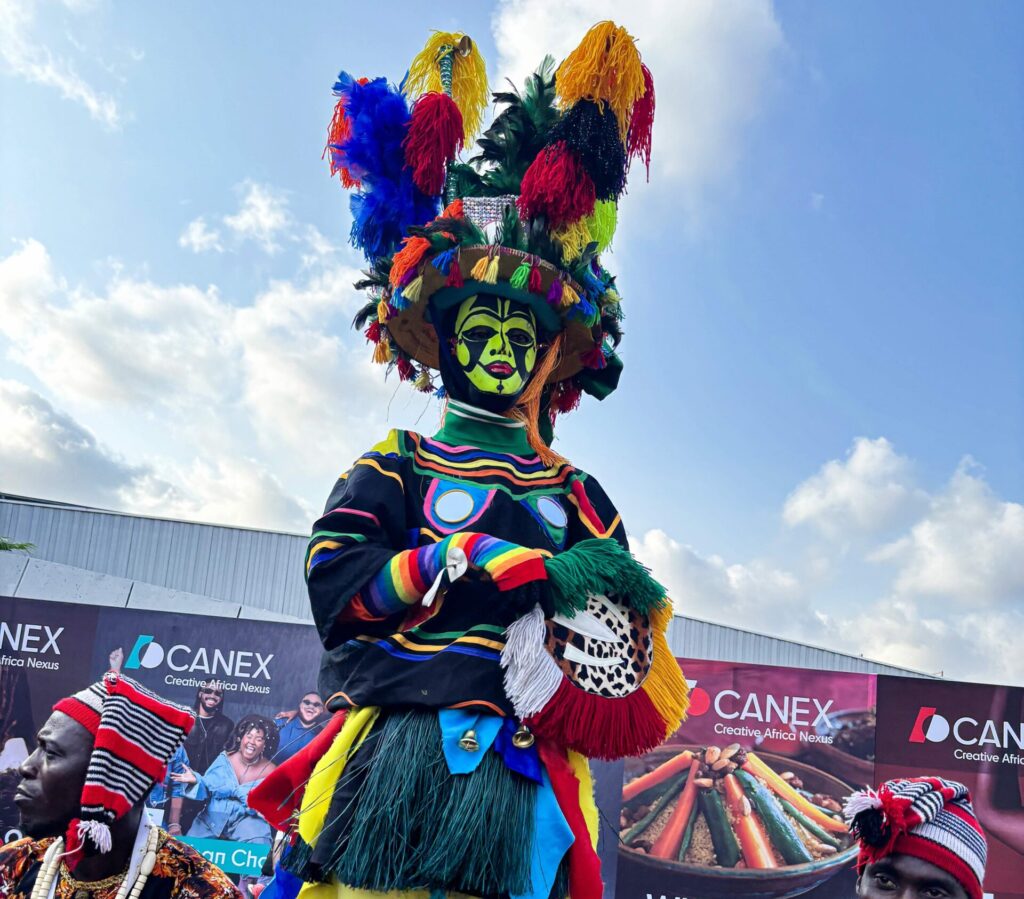
Africa exports up to 98% of its raw cotton, yet its designers and manufacturers struggle to source materials and expand production. At CANEX in Lagos, Nigeria, industry voices and the newly launched Africa Made It campaign highlighted what it would take to keep more manufacturing, jobs and income on the continent.
By Toochi Gabriel, bird story agency
Africa’s fashion industry has an opportunity to turn more of the continent’s raw materials into locally made garments, creating jobs and expanding markets for its designers and manufacturers. Connecting cotton growers with mills, factories and fashion businesses could keep more of that value within African economies.
At CANEX 2026 in Lagos, designers and industry leaders explored how investment in machinery, skills and stronger trading links could help businesses seize that opportunity.
The four-day Creative Africa Nexus Weekend, organised by Afreximbank and hosted by Nigeria from November 5 to 8, connects creative businesses with buyers, financiers and policymakers from Africa, the Caribbean and the diaspora. Its programme spans fashion, film, music, literature, arts, gastronomy and sport, placing fashion manufacturing within a wider discussion about turning African creativity into trade, investment and jobs.
Africa Made It, a continental advocacy platform, launched its “Power, Protect and Purchase” campaign at the event on November 6. Its focus is the fibre-to-fashion value chain: securing competitive energy for industrial mills, protecting emerging manufacturers from unfair imports and encouraging consumers to buy locally manufactured apparel.
Africa exports up to 98% of its raw cotton, captures only 2% of its total value and incurs an annual trade deficit of US$35 billion, according to Africa Practice research.
Building domestic capacity to spin, weave and sew locally produced cotton could sustain nearly two million permanent industrial jobs, according to the research cited in the release. It projects approximately US$33 billion in domestic household incomes each year and a recurring annual GDP contribution of US$34 billion. These are estimates of the potential gains from expanding local processing.
The campaign identifies a US$1.8 billion capital allocation towards critical structural enablers for garment transformation as a foundation for closing gaps in the value chain. For businesses on the CANEX floor, those gaps take practical forms: funding shortages, unreliable energy, difficulty sourcing materials and costly movement of goods across borders.
Chiemelie Ezeasor, an arts and fashion consultant, points directly to the core requirement for functional local manufacturing: “It takes investment. It takes collaboration between governments, public and private sector… So when we have people in government and policy makers work together, we can be able to understand how we can drive investment to our local manufacturers that will train artisans, get into school systems. That way… we’ll be able to transform the raw materials into finished products ready for export instead of exporting raw materials.”
His argument connects investment in factories with investment in people: manufacturers need equipment, but also the skills to turn raw materials into finished goods.
Ezeasor notes that updating industrial infrastructure is critical to modernising output without discarding cultural roots.
“African fashion is basically us wearing imported European garments… So, what we can do is local sourcing, local printing. How do we invest in our local machines? Today, people are still using hands to do tie-and-dye…”
“I understand that everybody wants to keep their heritage, but you also have to understand that the West, the Asians, everybody invested in the engineering… So what can we do about updating our machines?”
For Ezeasor, local sourcing also offers a way to reduce the expense and complexity of moving materials over long distances.
“First of all, there’s a sense of pride when you know that what you’re doing is sourced locally. It’s even far cheaper, it boosts the local economy, you create employment… if you’re getting your goods from, let’s say Southeast Asia, your raw material has to go around South Africa before it comes to West Africa, or you fly it. So take the expense of getting goods that you can actually source locally… we just need to keep telling people the importance of sourcing locally.”
But sourcing within Africa requires stronger transport connections and easier movement between countries. Ezeasor is unsparing regarding regional movement noting that it is easier for him to travel to from Nigeria to the United Kingdom than it would be to go to the Congo: “So if we cannot even travel amongst each other, we first have to solve that problem before we can solve African trade.”
Digital connections help businesses find one another, he says, although moving goods remains a challenge.
“Luckily for us, we have social media. You can contact a manufacturer in Kenya or a manufacturer in Morocco… But land transport, freight forwarding is still a very long way.”
It is not just the challenge of having ease of trade across the continent but also reliable manufacturing. For Cameroonian fashion designer Kibonen Nfi, who moved her manufacturing process to Asia after 20 years, ease of doing business is also important.
“I’ve manufactured in Africa for 20 years, and I’m never going to do it again. Simple. I’ve spent more than a million dollars trying to set up manufacturing on the continent,” she explained.
“I left the continent in 2023, and I’m manufacturing in Asia, and I’m not regretting anything. I love it because it’s easy. I love it because it’s scalable. If I want one million pieces, they’ll get it made for me,” she said.
For Fred Deegbe, strategic director at the Pan-African Fashion Alliance (PAFA), expanding African fashion businesses starts with helping them produce and trade at scale.
“The issue we’ve all faced is not one about skill, or about talent, or about creativity. It’s about scale.”
Importing materials and exporting finished goods remain difficult and costly, he says. PAFA is collecting data to help address these barriers while working with Afreximbank, governments and private sector institutions on challenges ranging from reliable energy to consistency in production.
Deegbe also points to Afreximbank’s partnerships with Galeries Lafayette, Portugal Fashion Week and Tranoï as opportunities for designers to reach international buyers and understand their requirements. Feedback from those buyers can help businesses improve their products and prepare for larger markets.
The aim, he says, is “to make not only a successful brand, but successful companies”.
Designers can register their interest through PAFA’s website, allowing the alliance to learn about their businesses and connect them with relevant opportunities.
For designer Nancy Henson, access to those opportunities depends partly on securing the money to grow. After about five years in business, funding remains her biggest challenge, with grant applications often unsuccessful.
She arrived at CANEX looking beyond immediate sales to the relationships that could support her next stage of growth.
“CANEX is not just another fair to display my clothes or make sales; rather, I saw it as an opportunity to meet other creatives as well and other investors.”
Michael Odessy, founder of his namesake label, sees an opportunity in making stylish menswear accessible and straightforward to buy. His approach centres on helping men dress well without making the process complicated.
“Make it easy for us, less stress, and we’ll buy.”
Delivering that simplicity to customers, however, requires considerable work behind the scenes. Odessy says his business sources many materials outside Africa and must train workers before they can begin production. Bringing more stages of the supply chain into the business remains a work in progress.
“It’s hard to be vertically integrated here. We’re trying our best. We’re halfway there, and we’ll get there very soon…”
bird story agency
Links for Editors