Visionary creators, including Charlemagne Andoche Amoussou, founder of the Lolo Andoche brand, are giving the traditional Beninese Kanvô cloth new uses in fashion and interiors. Once associated with the royal court of Abomey, the handwoven textile is reaching contemporary wardrobes as designers turn cultural heritage into local economic opportunity.
By Ibrahim Oredola Falola, bird story agency
Bent over a worktable, a man steadies a ruler against paper and carefully draws a line. A measuring tape lies within reach; nearby, workers sit at sewing machines, guiding fabric beneath the needles. Here in Lolo Andoche’s Cotonou workshop, clothes destined for boutiques in Benin and markets across Africa and in France begin with the patient work of drawing, cutting and stitching.
Founded in 1993 by Charlemagne Andoche Amoussou, the Beninese fashion house is using that craftsmanship to give Kanvô, a handwoven textile associated with the kings of Abomey, a new place in contemporary wardrobes. Its journey from royal cloth to ready-to-wear begins in rooms like this, where the challenge is to turn inherited skills into modern designs while keeping more of the value of Benin’s textiles at home.
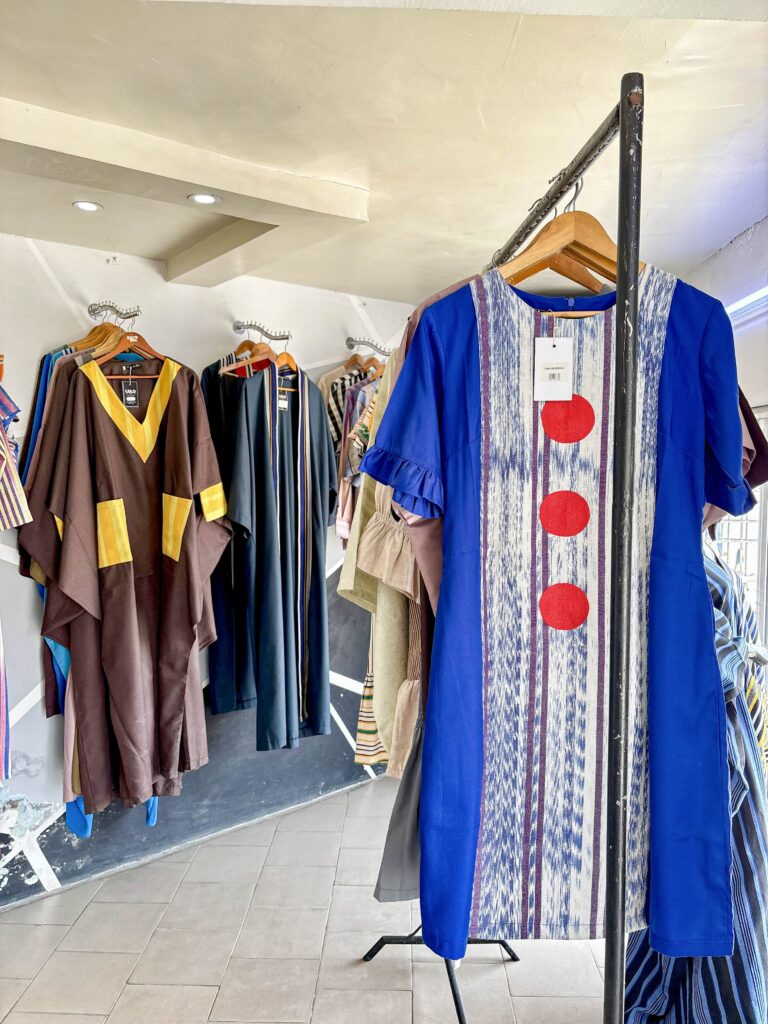
The brand combines traditional African textiles, including Kanvô, with linen and silk to create a modern, elegant aesthetic and offer a locally made alternative to imported clothing. But bringing the traditional fabric into contemporary fashion has meant confronting both practical constraints and inherited beliefs.
For centuries, this textile retained its status as a ceremonial cloth, rich in symbolism and memory. Its stiffness and limited production, however, presented challenges for modern ready-to-wear. According to Amoussou, a legend tells of a king who cursed the weavers, leaving their work unvalued and poorly paid.
For the designer, the time and skill involved in making Kanvô are precisely what give it value.
“Kanvô is craftsmanship, and craftsmanship is luxury. It’s handmade…. with all the time we took to weave, very slowly, unlike an industrially produced fabric,” said Amoussou.
Yet, the journey from fabric to finished garment is both ancient and modern.
Modernising the fibre without losing its character
As Kanvô moves from local workshops to semi-industrial production lines, Lolo Andoche fashion house is seeking to expand production while retaining the textile’s handcrafted character.
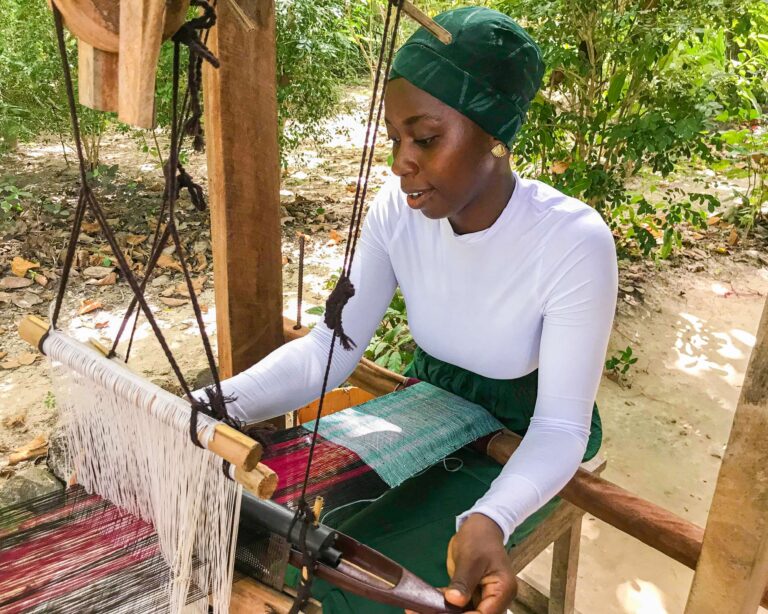
That work begins with sourcing. Working with Beninese weavers, particularly in Tori-Bossito, approximately 45 km (about 28 miles) away from Cotonou, the brand says it prioritises locally grown cotton, woven by hand to retain Kanvô’s distinctive texture and density.
“It’s a work of passion and great patience”, says Amoussou. He points out that an artisan takes about a whole day to weave barely a meter of Kanvô.
“Each geometric design inserted into the weave, each chromatic arrangement of cotton threads, told a story of lineage, expressed a specific social rank, or symbolized a precise mystical and political power”, he explains.
In the garment workshop, that woven heritage passes into the hands of cutters, dressmakers and finishers.
In his workshop at Etoile Rouge, a working-class neighbourhood of Cotonou, the designer employs around a hundred skilled, temporary and full-time workers. The designer adopts a structured mentorship approach. He personally supervises cutting, pattern making and design, instilling original and innovative techniques in new generations of dressmakers while breaking down external standards and stereotypes.
During a visit, the workshop is a hive of activity. Garments move through cutting, sewing, overlocking and quality checks before workers add buttons, iron, fold and package the finished pieces.
“I love my work because it’s my main source of fulfillment,” declares Alino Kouassi, head of the garment-making unit.
The flexible working conditions offered by Lolo Andoche help to retain not only staff but also customers.
“Work is organised in shifts to protect the health of the workers and to meet demand or urgent orders,” adds Kouassi.
Amoussou says this organisation allows the team to meet ready-to-wear orders while keeping garment-making skills and more of the value of production in Benin. Apart from sewing machines and generic garment-making tools, fabric, thread, buttons and even zippers that the team uses are produced in Benin.
Benin produces more than 600,000 to 700,000 tonnes of seed cotton per year, positioning itself as one of the leading cotton producers in Africa. The country processes 40,000 tonnes of cotton fibre per year.
Among the SMEs processing local cotton, Lolo Andoche is considered a key example of what needs to be done to preserve value in Africa.
In three decades, the Lolo Andoche brand has established itself as an essential economic reference by training hundreds of artisans and proving the international competitiveness of “Made in Benin”.
Promoting national textile expertise is no longer just a matter of style; it’s a major economic driver.
“Our strength lies in rigor and consistency. We have always preferred to grow slowly but steadily.”
By propelling local fashion to the forefront, the industry directly supports artisans and designers while meeting growing consumer demand. Consumers find the perfect compromise: unique pieces where contemporary elegance blends with the richness of cultural identity.
A symbol of identity, pride, and prosperity
“When we introduced Kanvô into our company as a material, the idea was to raise awareness of it. We realized that it represents enormous added value” declares Amoussou.
At international parades and fairs, Guineans were recognized by their indigo, Ivorians by their Baoulé Wawlé Tanni loincloth, Malians by their Bogolan fabric, etc. He wanted Kanvô to give Beninese designers a similarly recognisable signature.
“Today, Beninese people are gradually being recognised by their Kanvô.”
Making that signature suitable for everyday clothing has required practical changes. Amoussou says improved dyeing techniques help the brand’s cotton creations retain their colour in the wash. By combining handwoven strips with cuts that are both fluid and structured, the brand seeks to make the fabric more comfortable to wear.
For Amoussou, reviving the woven cloth is an imperative of economic and cultural sovereignty, far beyond mere fashion. It is also a way to sustain local artisans’ skills by finding new customers for their work.
Yet expanding the fabric’s uses brings fresh demands on the weavers. One constraint is the range of patterns available to designers looking for something different.
“The only difficulty I encounter is creating different and unique patterns with Kanvô. For now, I have not yet found the qualified weavers who can allow me to do this,” notes Mélia Adjovi, an interior designer and client of Lolo Andoche.
Her work shows how far Kanvô’s possibilities extend beyond clothing. For over three years, Adjovi has been incorporating it into her design projects in collaboration with Lolo Andoche. She uses it for lighting fixtures, cushions, rugs, curtains and placemats, experimenting with a material she describes as increasingly accessible and adaptable.
“Today, for example, you can have Kanvô that resembles jeans (denim). This transformation opens up a wider range of possibilities than was previously available”, she says with satisfaction.
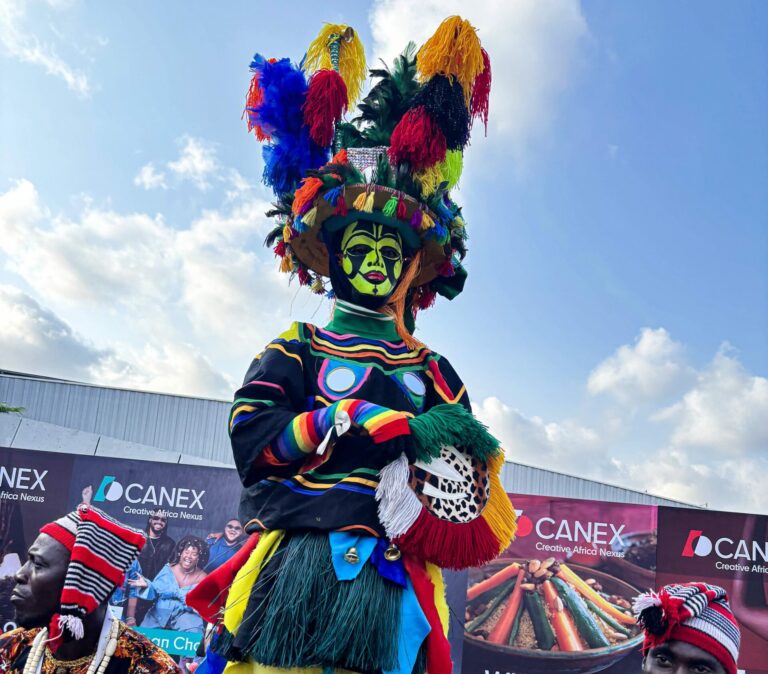
The brand regularly organises public events such as fairs, exhibitions, and fashion shows to promote Kanvô. A few years ago, it held a three-day exhibition at the Cotonou International Conference Centre to introduce Kanvô to a wider audience.
Later, during the C4 conference, it organised a fashion show featuring four designers. According to Amoussou, the show attracted the attention of the then minister of culture and demonstrated how Kanvô could be used for everyday garments, including shirts and jackets.
“Afterward, we organized the Kanvô Night, inviting diplomats, leaders, and authorities to show them what can be done with this fabric. Unfortunately, this event was not held a second time,” the designer laments.
To conquer larger markets, Lolo Andoche has set up five shops in Benin and two others in Togo. In October 2026, the firm held a two-week campaign to encourage local consumption, offering a 15% discount on its clothing and fabrics. Amoussou says customers responded enthusiastically.
For Adjovi, the next step is to keep widening the fabric’s place in Beninese design.
“My goal is to continue using Kanvô by highlighting local know-how and making it present in all spheres of Beninese creative society: fashion, textiles and furniture so that it becomes a showcase of Beninese artisanal know-how,” says Adjovi.
From woven fabric to finished clothing, Benin’s cotton value chain is now entering its renaissance phase.
Back in the Cotonou workshop, that ambition takes shape through the work of drawing patterns, cutting fabric and guiding each seam beneath a needle. The finished garment carries the Lolo Andoche label; behind it are the skills of weavers, cutters and dressmakers. As Kanvô finds new customers and uses, the opportunity is to turn a cloth associated with royal distinction into a lasting source of work and income for the people who make it.
bird story agency