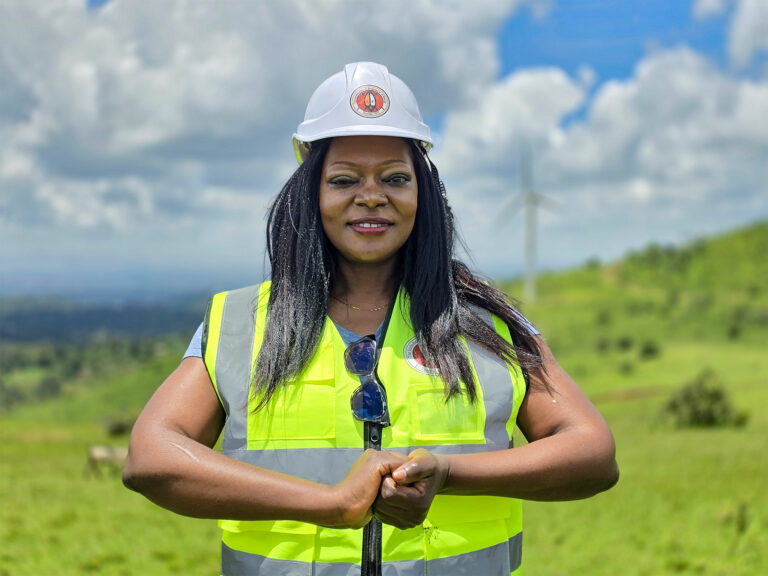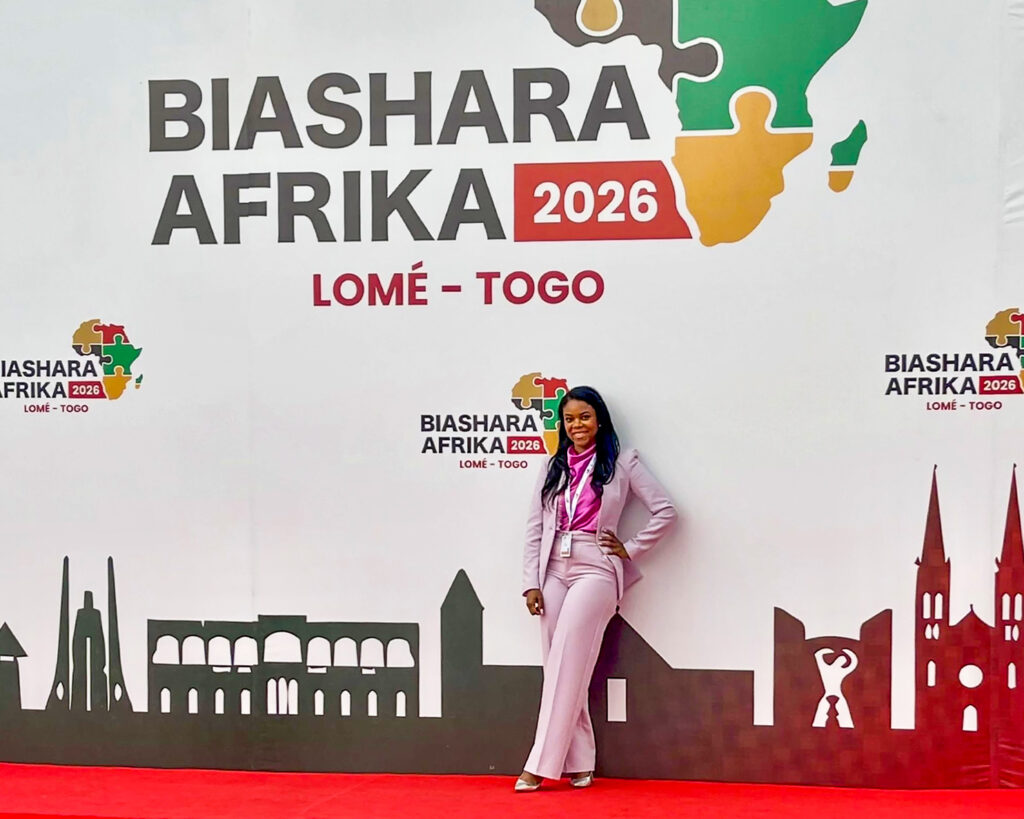
What began as a dispute at an airport in Togo soon evolved into a much larger conversation about mobility across Africa. After an encounter with immigration officers unexpectedly helped spark a landmark visa-free announcement for Africans, immigration attorney and law professor Channel Andrews found herself at the center of debates around Pan-African movement, diaspora identity, and the barriers that continue to shape travel across the continent. In this conversation, she reflects on citizenship, belonging, borders, and why Africa’s integration ambitions cannot succeed without fixing how Africans move within Africa.
Bonface Orucho, bird story agency
When Togo announced in May that it would become visa-free for all African passport holders, the decision was widely welcomed across the continent as another milestone in Africa’s long-running push toward freer movement and deeper integration.
The measure, announced by President of the Council Faure Gnassingbé during the Biashara Afrika 2026 forum in Lomé, positioned Togo among a growing number of African countries easing entry restrictions for fellow Africans as governments seek to align border systems with the ambitions of the African Continental Free Trade Area (AfCFTA). Authorities said the policy was intended to strengthen African integration, improve the free movement of people and goods, and deepen cooperation across the continent.
The announcement reflected a broader continental trend. Rwanda has for years maintained visa-free access for all Africans, while countries including Benin, Seychelles, The Gambia, Ghana, and Kenya have progressively expanded visa openness as part of wider regional integration and tourism strategies. Across Africa, mobility reforms are increasingly being tied to trade ambitions under AfCFTA, whose success depends not only on moving goods across borders, but also entrepreneurs, investors, workers, and ideas.
Yet behind the symbolism of visa liberalisation lies a more complicated reality: many African border systems remain administratively fragmented, inconsistently implemented, and often poorly adapted to the growing number of Africans living transnational lives across multiple citizenships, passports, and regions.
That contradiction became painfully personal for Channel Andrews.
Andrews is an American- Ghanaian citizen, immigration attorney, and professor of law originally from the United States who travelled to Lomé from Paris to attend Biashara Afrika as an official guest connected to AfCFTA discussions. Despite carrying a Ghanaian ECOWAS passport and obtaining travel authorisation from Togolese authorities confirming her visa exemption, she says border officials informed her upon arrival that because she had travelled from France rather than Ghana, she required a visa to enter the country.
The situation escalated after immigration officers discovered she had entered France using her American passport rather than her Ghanaian one. According to Andrews, officials then insisted she enter Togo using her American passport instead of her African one, despite her ECOWAS status and invitation to a continental integration forum focused on African unity and intra-African trade.
For Andrews, the issue went far beyond a bureaucratic disagreement.
“As a Black American born and raised in the United States, whose lifelong dream was to ‘make it back home’ to Africa, earning diasporan citizenship in Ghana was profoundly meaningful to me,” she wrote afterward. “I was especially disheartened to be forced to enter the continent as an American rather than as an African.”
The encounter might have remained a private immigration dispute were it not for what happened the following day.
Nigeria’s Minister of Industry, Trade and Investment, Dr. Jumoke Oduwole, who had witnessed the airport exchange after arriving on the same flight, later referenced the incident publicly during her opening address at Biashara Afrika. Speaking before an audience that included current and former African heads of state, business leaders, and policymakers, she argued that African unity begins with how Africans treat one another at their borders.
The issue quickly drew wider attention inside the conference halls.
Shortly afterward, Faure Gnassingbé announced that Togo would exempt all African passport holders from visa requirements, a move later welcomed by both the AfCFTA Secretariat and Afreximbank as an important step toward strengthening continental integration and facilitating intra-African mobility.
But for Andrews, the announcement did not fully resolve the deeper issue her experience exposed.
She argues that Africa’s integration ambitions still collide with outdated border systems that struggle to process dual citizenship, diaspora return, and increasingly mobile African identities. In her view, many Africans and diasporans continue to encounter suspicion, inconsistency, and administrative confusion simply because their lives stretch across multiple countries and passports.
In the following conversation, Andrews reflects on her experience at Lomé airport, the emotional weight of being denied entry as an African citizen, and the broader institutional contradictions shaping Pan-African mobility in the AfCFTA era.
This interview has been edited for length.
Could you start by introducing yourself?
My name is Channel Andrews, and I am a Philadelphia native who lives between Paris and Accra. I am a business and immigration attorney, as well as a law professor.
Could you briefly walk us through your journey from being born in the United States to becoming a Ghanaian citizen?
As a Black American, I’ve always been aware of the history of my people within the United States, which is that we arrived there as enslaved people. I am a descendant of enslaved Africans.
Unfortunately, because of slavery, I do not know exactly which African country my people come from, but I have always understood and accepted that I am African.
Ghana has a diasporan citizenship program for people like me, one that gives us an African home on the continent. Ghana was actually the first African country I ever visited, and that was before the citizenship program became available.
I fell in love with the country and developed strong ties there. So when the citizenship program was announced, I was honored to apply and even more honored to be accepted and finally have an African home as a Ghanaian citizen.
What first drew you toward Pan-African thought and identity?
First and foremost, my earliest connection to Pan-Africanism came through identifying as pro-Black.
In the United States, race and color have historically shaped society because of segregation and systemic inequality. So growing up as a Black person, I naturally identified strongly with Black identity and Black liberation.
As I learned more about our history and struggles, I began connecting being pro-Black to being Pan-African, because in the Black American context, to be Black is ultimately to be African.
I didn’t necessarily learn that in school. I was fortunate to grow up in a home where my parents exposed me to Black history, Black liberation movements, and influential Black leaders. That is really where my Pan-African consciousness developed.
What did receiving Ghanaian citizenship mean to you emotionally?
It meant everything. Truly everything.
As an immigration attorney, I understand naturalization laws very well, including both the privileges and responsibilities that come with citizenship.
Many people pursue second citizenships for convenience or benefits, but they don’t always fully think about the responsibility attached to taking an oath of allegiance to another country.
I’ve lived in France for about ten years now, which is long enough to become a French citizen, but I’ve never had the desire to become French because I knew I could not honestly take an oath pledging allegiance to the French state and culture.
But when I took my oath of allegiance to Ghana, I meant every word of it.
I was proud. I take my Ghanaian citizenship very seriously. I always tell people, jokingly but also seriously, that Ghana is my country and I would go to war for Ghana right now. I even say that if my sons one day wanted to join the Ghanaian army, I would be proud of that.
That’s how deeply meaningful it is to me.
Could you walk us through what happened when you arrived in Togo?
I traveled from Paris to Lomé for a conference, and as a Ghanaian citizen I should not have needed a visa to enter the country.
However, when I arrived and presented my Ghanaian passport to border officials, I was told that I needed a visa because I had traveled from France rather than Ghana.
That made absolutely no sense to me because I was holding an ECOWAS passport and entering another ECOWAS country. ECOWAS nationals are supposed to enjoy freedom of movement within member states.
So it was absurd to be told I needed a visa inside a passport that literally says ECOWAS on it.
Then, once officials discovered that I also hold American nationality, the issue escalated. The discussion shifted from requiring a visa in my Ghanaian passport to refusing to allow me to use the Ghanaian passport at all.
Instead, they insisted that I enter Togo using my American passport with a visa attached to it.
At what point did you realize officials were interpreting the rules differently?
Immediately.
Even though I should have been able to enter visa-free, Togo still required travelers to obtain a pre-authorization before flying. I had already obtained that authorization using my Ghanaian passport information.
The authorization explicitly listed Paris Charles de Gaulle as my departure airport and clearly stated that I was exempt from visa requirements.
So for officials to then tell me that I needed a visa because I had flown from Paris made absolutely no sense, especially because they had already approved my travel from Paris without a visa.
I even showed them the authorization document, but they essentially treated it as irrelevant.
Did you feel the issue reflected confusion, discretion, or a deeper policy contradiction?
To this day, I’ve heard different explanations from different Togolese officials.
On one hand, the announcement by the president introducing visa-free access for all Africans appeared to acknowledge that I should never have needed a visa in the first place.
But on the other hand, some officials later insisted that what happened to me was proper procedure and that Togo has the right to require visas from people arriving from abroad or using multiple passports.
The issue is that while Togo is absolutely entitled to maintain its own immigration laws as a sovereign country, it is also an ECOWAS member state, and ECOWAS rules guarantee freedom of movement for ECOWAS nationals.
So even if Togo considers its domestic policy correct, that still does not override ECOWAS law.
You traveled to Togo for a conference focused on African integration and trade. How ironic did that experience feel?
It was extremely ironic.
I attended the Biashara Afrika conference, which was hosted by the African Continental Free Trade Area. The entire mission of the conference was to promote intra-African trade, African cooperation, and African economic integration.
So it was deeply ironic that I was essentially being forced to enter Africa as a foreigner rather than as an African citizen in order to attend a conference about Africans working together.
One of the issues repeatedly discussed during the conference was how borders continue to hinder trade and movement across Africa. It is often easier and cheaper for African businesses to trade with countries outside the continent than with neighboring African states because of how our borders are structured.
These barriers affect not only people, but also goods, services, and infrastructure development.
The African Union’s Agenda 2063 envisions a borderless Africa in the future, but we cannot wait decades for that reality. These are issues we need to address now because they are directly limiting African development.
Do you think Africa can realistically deepen economic integration while these mobility barriers remain in place?
Not necessarily. It will be very difficult.
Perhaps certain aspects can continue digitally through e-commerce or online services, but even then, physical movement eventually becomes necessary because goods still have to cross borders.
At some point, trade becomes physical, and the border barriers still remain.
How common do you think these kinds of inconsistencies are across Africa?
Honestly, even as an immigration attorney, I had no idea this was happening on such a scale.
I had heard of difficulties faced by non-Africans trying to obtain visas to African countries, but I genuinely did not realize that ECOWAS nationals who should legally travel visa-free were also experiencing these issues.
Since sharing my story publicly, many people have contacted me saying that similar situations have happened to them, not only in Togo but in other ECOWAS countries as well.
What shocked me even more was learning that this is not limited to Africans flying into the continent from abroad. Some people have experienced the same problems while traveling between African countries inside the continent itself.
That makes even less sense.
The African Union refers to the diaspora as Africa’s “sixth region.” What does that mean to you personally?
It means that the African Union has formally recognized Africans in the diaspora as part of the continent’s broader identity and future.
It means that when African policymakers think about Africa’s development, they also have to think globally because millions of Africans and people of African descent live outside the continent.
That recognition is especially important today because global instability is increasingly pushing many diasporans to reconnect with Africa more seriously.
Having an official place within the African Union framework matters.
Do African states truly understand the realities of diaspora Africans returning to the continent?
Some countries do.
The countries that are forward-thinking and understand the value diasporans can contribute have started creating policies to engage them.
Ghana is probably the clearest example. Through initiatives like the Year of Return and its citizenship programs, Ghana actively encouraged diasporans to reconnect with the country through tourism, investment, and long-term engagement.
But beyond tourism, countries are beginning to recognize the intellectual and economic value diasporans bring through investment, skills, and expertise.
Other countries like Benin, Kenya, Sierra Leone, and Burkina Faso are also beginning to move in this direction.
What risks do African countries face if diasporan communities feel alienated or discouraged?
Diasporans can experience a very unique form of culture shock because there is a paradox involved.
You know this place is home historically and emotionally, but at the same time you may still feel disconnected from the culture, infrastructure, or social systems.
That experience can be complicated.
But I believe diasporans must also return with open minds and realistic expectations. Africa will not necessarily resemble the places we are coming from, and people must be prepared for that.
For example, I’ve spent enough time in Ghana that when the electricity goes out, it actually feels normal to me. It feels like home.
But someone arriving from the United States for the first time may find that frustrating or shocking.
We have to educate ourselves about the realities on the ground, embrace those realities, and if we truly want change, then contribute to improving things instead of only complaining.
What reforms could help prevent experiences like yours from happening again?
My experience highlights the fact that visa-free policies need to account for the realities of modern African identity and mobility.
African governments must recognize that some Africans are dual nationals, some live abroad, and some travel internationally using multiple passports.
These realities must be clearly reflected in immigration policies and implementation procedures.
Countries need to clarify whether visa-free policies apply only to Africans traveling within the continent or also to Africans traveling from abroad and holding dual citizenship.
Those distinctions must be explicitly addressed to avoid confusion and arbitrary enforcement.
Did the incident change your relationship with Africa in any way?
No. If anything, it made me feel even more African.
Before becoming Ghanaian, I understood visa requirements because I was entering African countries as an American.
But after becoming Ghanaian, I became accustomed to traveling freely within parts of Africa without visas, and I realize now that I had become somewhat privileged in that regard.
I had heard stories from Africans facing mobility barriers, but after experiencing it personally, I finally understood emotionally what that feels like.
Even though my visa was ultimately issued for free, most Africans who face these barriers must pay for visas, navigate lengthy processes, and repeatedly justify why they should be allowed to enter another African country.
That can make people feel diminished.
It also undermines the idea of African unity when Africans are questioned more intensely than foreigners entering the same countries.
Now I truly understand what millions of Africans across the continent experience.
What message would you give to Africans in the diaspora considering deeper engagement with the continent?
I still strongly encourage it.
Despite my experience, I continue to believe that Africa is both the present and the future.
When we look at the instability, discrimination, and uncertainty affecting many Western societies today, I believe the continent represents an opportunity for Africans and diasporans to build something better for themselves collectively.
If we return, invest, contribute our skills, and help develop the continent, we can create stronger societies for future generations.
So regardless of what happened to me, I still encourage diasporans to engage with Africa through tourism, business, investment, and even permanent return.
bird story agency
Useful link for editors:https://visasnews.com/en/togo-drops-visa-requirement-for-african-travelers/,https://visasnews.com/en/togo-drops-visa-requirement-for-african-travelers/