Rescuing colleagues, freeing trapped turtles and working with communities: the 2026 African Conservation Awards recognise the many ways rangers and their supporters protect life across the continent.
By Andrino Akuda, bird story agency
When armed attackers struck the headquarters of Upemba National Park in the Democratic Republic of Congo in March 2026, rangers helped rescue their colleagues and coordinate evacuations while defending the station.
Seven colleagues lost their lives. In the aftermath, the anti-poaching team helped restore operations and continued protecting the park.
That service has earned the Upemba LE/LAB Ranger Team the Best Ranger Team award at the 2026 African Conservation Awards, announced by the Game Rangers’ Association of Africa (GRAA) on Tuesday, 13 October.
Their recognition opens a window onto a profession whose work stretches from inland parks to mangrove forests and the sea. Across Africa, rangers care for wildlife, work alongside communities and respond when people and animals need help.
This year’s awards honour 12 rangers, teams and supporters from seven countries: the Central African Republic, the DRC, Ethiopia, Kenya, Mozambique, South Africa and Zimbabwe.
Upemba’s rangers lead the way for the DRC
At the time of the attack, only 40 of Upemba’s 256 rangers were armed and present at the headquarters. The award recognises their response during the assault and the work that followed, including strengthening law enforcement, patrol planning and ranger leadership.
The park has welcomed the news as a moment of pride for its anti-poaching unit. In a statement, Upemba said the award celebrates the courage, dedication and professionalism of its rangers, whose daily commitment to protecting one of the DRC’s most remarkable landscapes “continues to inspire” the team.
“This distinction belongs first and foremost to our park rangers. In a demanding and often unpredictable environment, they demonstrate that conservation is not just about protecting wildlife and ecosystems, but also about preserving our natural heritage for future generations,” said Christine Lain, the park’s director and site manager. “Their perseverance, discipline and sense of duty embody the spirit of Upemba National Park and its gradual revival.”
Responding to the honour, Sylvain Ariana Lado, a Congolese conservationist and head of the anti-poaching unit (conservator and LAB coordinator) at Upemba National Park, said the team was overjoyed.
“I am truly overwhelmed with joy at being selected and recognised among the finalists for the African Conservation Awards 2026. It is important to recognise the hard work we do, because our profession demands passion, determination and sacrifice, ” he said.
The park thanked the GRAA for recognising the essential role of rangers across Africa. It also thanked its technical, financial and institutional partners, whose support for training, equipment, staff welfare and field operations has strengthened the unit. For Upemba, the award belongs to everyone who stands beside its rangers.
“Together, we make a difference,” the park said, thanking its rangers for their service, resilience and unwavering commitment.
A long history
They are caring for a park with a long history. Established by royal decree in May 1939, Upemba is one of Africa’s oldest national parks. It spans parts of Lualaba, Haut-Katanga and Haut-Lomami provinces in south-eastern DRC.
The park lies where the Zambezian and Guinean biogeographic regions meet, bringing together habitats that support an exceptional variety of wildlife. It shelters the country’s savannah elephants, wild zebras and the last buffalo of Katanga.
Past crises have taken a toll. Black rhinos and large carnivores have disappeared from the park. Its managers say new structures and standard operating procedures are now in place across security, conservation and development, with the ambition of making Upemba a conservation model for the DRC and beyond.
For its rangers, protecting that future means keeping the park’s daily work going, including after the loss of colleagues.
Conservation groups have joined calls for stronger protection for rangers, particularly in areas affected by armed conflict.
A rescue built on trust
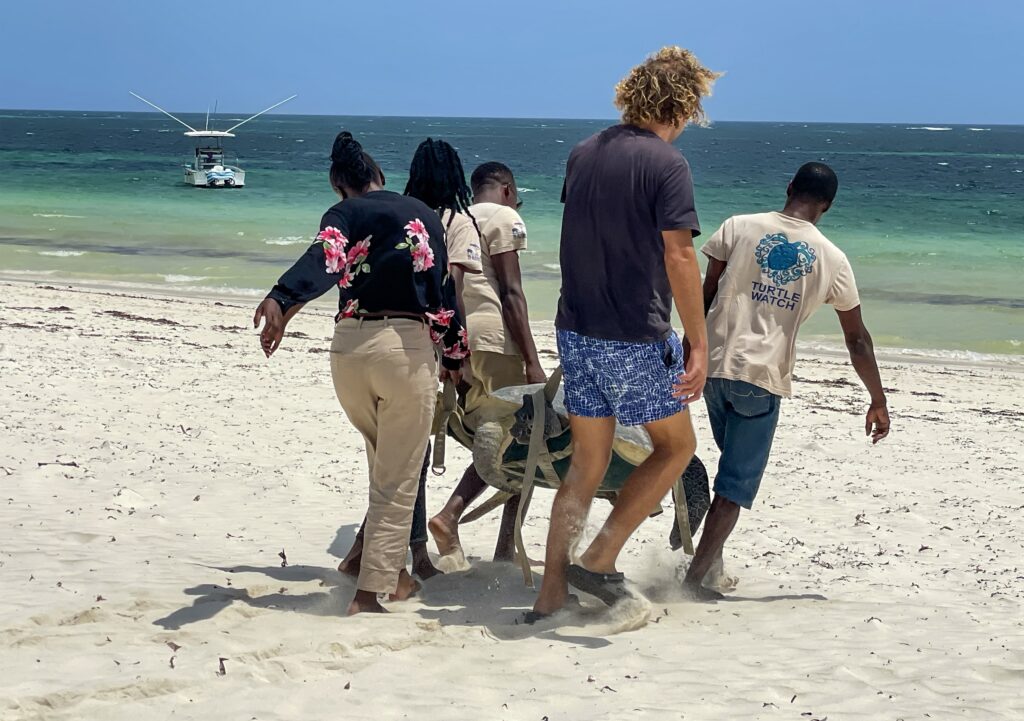
In Watamu, on Kenya’s coast, conservation brings fishers and rangers together to help sea turtles caught in fishing gear.
Fikiri Kiponda, this year’s Best Marine Ranger, leads Local Ocean Conservation’s sea turtle bycatch response programme. Under his coordination, the programme reached its 25,000th turtle rescue and built a network of 2,240 fishers.
Each rescue is part of a larger partnership: fishers who encounter turtles in their daily work are helping protect them.
“This recognition doesn’t belong to me alone,” Kiponda said in a video message. “It belongs to the entire team, which has worked tirelessly with the local fishermen to bring sea turtles back from the brink.”
He said the programme’s approach rests on a simple idea. “People usually protect what they value, and we are here to make sure that the local community realises that the sea is theirs to protect.”
He also had a message for the next generation. “For the young, future African conservationists, this job is worthy of your life,” he said.
The marine awards also recognised Victoir Myong Cham Kandolo of the DRC’s Mangroves Marine Park as first runner-up. The country’s only marine park protects mangrove forests that local conservationists describe as a nursery for fish, crabs and sea turtles.
Bakari Mohamed Sheumbe of Kenya’s Malindi Marine National Park was second runner-up.
Care in difficult moments
In the Central African Republic, Dimanche Élysée leads an eight-person patrol team at Manovo-Gounda St Floris National Park.
Named Best Field Ranger, he was recognised for both his law enforcement work and the care he showed during a dangerous encounter. The GRAA highlighted how he gave first aid to a wounded armed poacher and coordinated his evacuation.
In February, Élysée also led an operation that resulted in 11 arrests and the seizure of 1,924 kilograms of illegal bushmeat.
“These recognitions from the African Conservation Awards are a great source of pride and a motivation,” Élysée said in a video message. “They also promote the work of my colleagues, rangers (écogardes) who work every day on land to protect our land and our natural resources.”
He added that the recognition encourages rangers to work together and to carry on “our efforts with even more determination.”
His award recognises the judgement and responsibility that come with leading a team in the field.
Stephen Dell of South Africa’s Pilanesberg Rhino Protection Unit was first runner-up, while Feleg Asefa of Ethiopia’s Awash National Park was second runner-up.
The teams behind the work
Upemba shares its category with the Oceans Without Borders Benguerra Community & Conservation Rangers in Mozambique, named first runner-up, and Zimbabwe’s Victoria Falls Anti-Poaching Unit, the second runner-up.
The awards also recognise the people who help rangers do their jobs.
South Africa’s Pilanesberg Wildlife Trust won Best Ranger Supporter for connecting rangers with funding, expertise and practical resources. Its support ranges from training and equipment to rhino monitoring, aerial surveillance, veterinary interventions and community engagement.
The Bush Babies Environmental Educators Team of Transfrontier Africa in South Africa was first runner-up. Kenya’s Mara Elephant Project was second runner-up.
Their recognition places education, resources and community relationships alongside fieldwork as essential parts of conservation.
Recognition beyond the awards
“Rangers work in demanding and often dangerous conditions without the recognition they deserve,” the GRAA said in announcing the recipients.
The awards give names and faces to some of that work. They also offer an opportunity to recognise the wider ranger community across Africa: the people heading out on patrol, maintaining relationships with neighbours, responding to calls for help and supporting their colleagues.
Founded in 1970, the GRAA provides support, networks and representation for rangers across the continent. This year’s awards were supported by SATIB Insurance Brokers, with Prince Albert II of Monaco as patron.
At Upemba, the work continues after the loss of seven colleagues. In Watamu, it continues through a network of fishers helping turtles return to the sea. Across the continent, conservation is sustained by these daily acts of skill, care and commitment as evidenced by this year’s recipients.
bird story agency