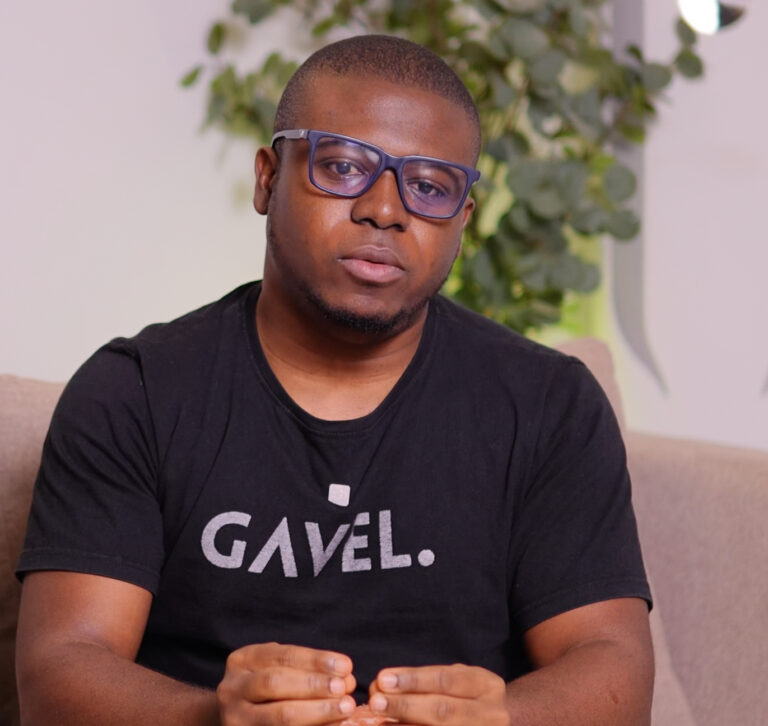
For Nigerian event organizer Joshua Nwankwo, bringing people together is just the beginning. He uses artificial intelligence through Letsdap to assist event organizers in improving events and maintaining connections long after they end.
By Toochi Gabriel,bird story agency
As the last attendees exited the venue, organisers began collecting badges and packing equipment, while vendors emptied their booths. The chairs were stacked, the generator was turned off, and the cameraman raced to get event images to someone’s status update within 12 hours.
In the days that followed, the events WhatsApp group set up to keep attendees in touch started filling up with morning prayers and memes. The gathering had ended, and the talks and friendships it had sparked were rapidly disappearing.
Joshua Nwankwo, a front-end engineer, developer relations lead, and community organiser, had witnessed this happen several times. After designing websites since he was 16 and coordinating events with tens of thousands of registrations, he realised that while organisers could bring people together, they frequently failed to maintain those relationships once everyone left.
“From two angles: as an organiser and also as an attendee,” Joshua explains, “You go to an event, you meet these really amazing people that you’d like to establish relationships with…A couple of weeks later, they’re reaching out to you, and you genuinely can’t remember who they are, where you met them, or even why you met them.”
He created Letsdap, an event management platform that employs artificial intelligence to help organizers analyze past events, interpret audience comments, identify attendance patterns, and make informed decisions regarding future gatherings.
Organizers frequently used different tools for ticketing, participant check-ins, and community communication, which left them with fragmented data and little time to analyze what worked.
Nwankwo saw an opportunity to apply his technological knowledge to these concerns, drawing on issues he had seen when organizing and attending gatherings.
The platform’s Backstage function enables event organizers to ask questions in normal language and receive recommendations based on their event data. Rather than merely reporting data, the system looks for trends that can be used to make decisions about attendance, partnerships, and promotion.
“If you’ve ever organised any major event, you know that a lot of decisions are made based on gut feelings,” Joshua says. He attributes this less to a lack of planning than to the pressure organisers face when registrations fall short or deadlines approach.
The pressure to make these decisions is high in an industry with a large economic impact. According to a 2026 analysis conducted by the Events Industry Council and Oxford Economics, business events produced $25.8 billion in direct spending in Africa in 2025. However, the continent accounted for only approximately 2% of global direct business-event spending, indicating that there is still room for growth and that organizers must understand what attracts attendees and makes events effective.
Kevin Chibuoyim Okoye, co-founder of Blockchain UNN and convener of Southeast Nigeria Blockchain and Games Week, shared Nwankwo’s enthusiasm in fixing these concerns. The five-day event brought together activities across 16 build stations in states including Enugu, Imo, Delta, Rivers and Benue.
The volume and geographical dispersion created logistical issues that standard event platforms were not equipped to address. Okoye required a means to coordinate registrations across multiple sites without creating a new website from the ground up.
“On multiple platforms, you can only set one event location,” he explains. This limitation prompted him to look for an alternative. Letsdap allowed his team to create customised registration forms and manage the event’s different locations through one platform.
Weather forecasting was another practical example. Despite the originally sunny conditions, organisers had anticipated rain, which allowed them to set up canopies for the vendors.
“One feature that actually interested me the most was actually the weather forecast,” Okoye says. Attendees could see the forecast when registering, giving organisers information they could use when preparing the event space. Although they could not change the date, they could plan around the expected conditions.
According to Nwankwo, Backstage can assist organisers discover what worked at past events, such as which community partners attracted the most people. It can also aggregate hundreds of feedback comments to highlight reoccurring issues without forcing planners to read them all individually.
“Most people go to events to meet new people, but end up talking with just the two friends that they came with or even nobody at all,” he says. Sometimes, attendees simply do not know who else in the room might share their interests or professional goals.
Chibuike’s crew maintained communication even after the event. They used Letsdap to send emails to participants and intended to use the collected data to continue reaching out to their community. This meant that engagement with guests didn’t have to be limited to an active WhatsApp group.
According to Ugochukwu Okogeri, an Enugu-based event planner, software developer, and convener, artificial intelligence (AI) could assist event planners in managing the practical demands of events, such as budgeting and attendee tracking, vendor coordination, and measuring Profitability. However, he emphasised that while technology could facilitate introductions, it could not guarantee meaningful partnerships.
“AI can actually facilitate that networking happening, that connection happening… But it does not guarantee—it doesn’t guarantee trust or it doesn’t equate to value,” Ugochukwu said. “That part still has to have a human interaction for it to be certified trustworthy; that relationship still has to be certified trustworthy.”
His point exemplifies the impact Letsdap intends to have: assisting people in making connections that go beyond the venue while delegating the task of creating trust to those involved.
Nwankwo developed a networking function that uses attendee features to recommend appropriate relationships. Those who agree to meet can share information via a QR-code interaction known as a “dab”. Attendees can also revisit the list of persons they met at a specific event and recall those relationships if someone contacts them again.
Handling attendee information raises concerns regarding privacy and fairness. Joshua claims that they seek to comply with Nigeria’s data protection regulations and have chosen not to use ethnicity, religion, or tribe as criterion for pairing attendees. The objective is to connect people based on their stated interests and goals.
Organisers can better the next event by retaining useful information from the previous one. Rather than depending on memory or gut reactions, they can use attendance data and comments to make decisions about locations, scheduling, and collaborations. Attendees on the other hand, have the opportunity to meet important people in a crowded space and remember those interactions long after the event is over.
Ultimately, neither data nor algorithms can predict what a link will become. As Nwankwo describes it:
“Yes, AI is going to help introduce you to people,” but then you still need to be the one to give the first handshake and the first hug.”
bird story agency