Entrepreneur Mengué Diouf is helping poultry farmers use real-time monitoring and data management to improve oversight, reduce losses, and make more informed decisions. Her technology is helping Senegal become more food self-sufficient.
Penda Thiam, bird story agency
Before setting foot on her poultry farm, Mengué Diouf already knows how her birds are doing. From her phone, she can check each morning whether the farm’s workers have arrived on time, whether feeding schedules were followed, and whether anything unusual occurred overnight.
What began as an attempt to stop the heavy losses threatening her own poultry business has evolved into SEDAP’Tech, a digital management platform that is helping farmers across Senegal oversee their operations, track production data and respond more quickly to problems that can wipe out an entire flock.
The idea grew out of Diouf’s lived experience rather than a deep knowledge of technology.
After completing three years of training at the Centre de Référence aux Métiers de l’Aviculture (CRMA) in Diamniadio, a training institution focused on professionalising Senegal’s poultry sector, Diouf began building her own poultry business. Like many producers, she expected hard work to be enough. Instead, she encountered a challenge common across the industry: the inability to constantly monitor what was happening on the farm.
Managing poultry operations required her to travel long distances to her facilities in the Thiès region while also balancing other responsibilities. The more her operations expanded, the more difficult it became to keep track of daily activities, especially when she could not be physically present.
The consequences were costly.
“I would say that the misfortune that led to the creation of this solution was that we suffered enormous losses due to several factors. Because the first production we launched experienced a 70% loss, mainly because we were not present in the field. We simply did not have the time and it was not possible to be everywhere all the time.”
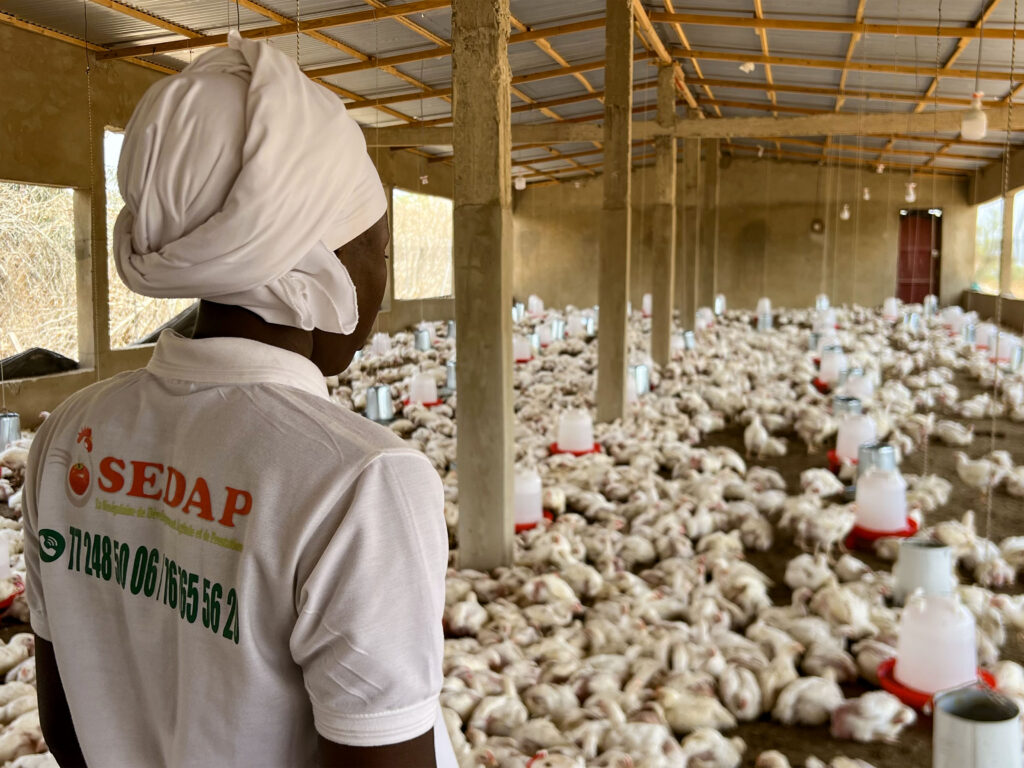
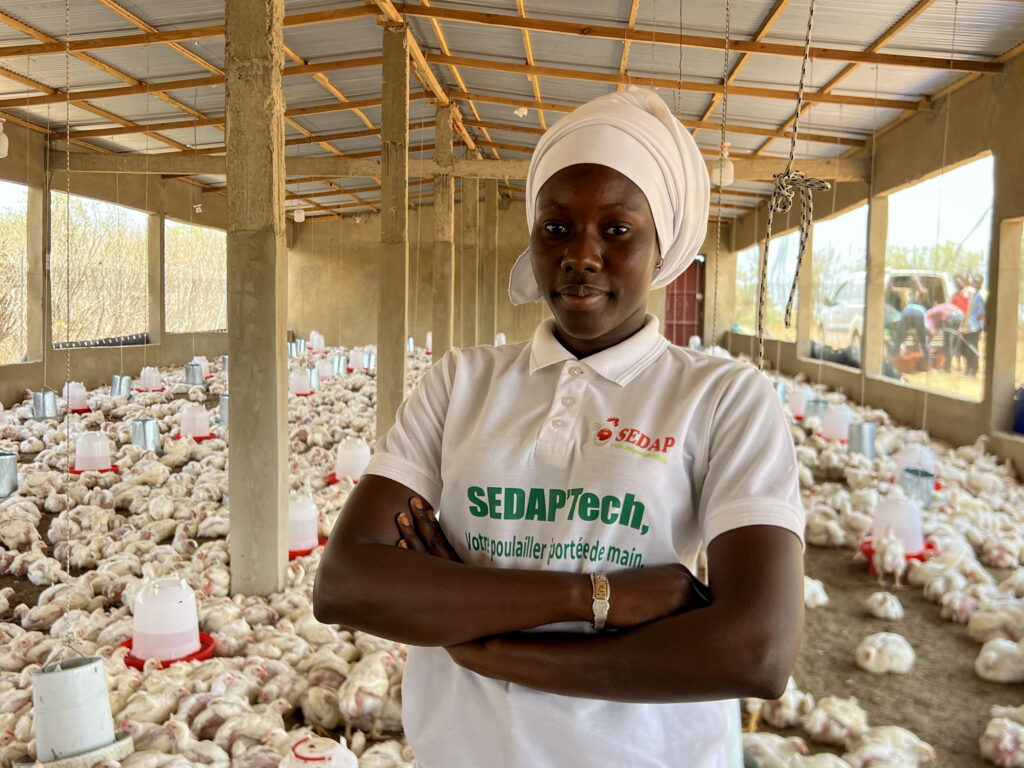
Entrepreneur Mengué Diouf in her chicken coup in Keur Demba Anta, Thiès, Senegal on May 6, 2026. Photo: Penda Thiam, bird story agency
The losses exposed a gap that many poultry farmers face. Production depends on strict schedules for feeding, watering, hygiene and monitoring bird health. Small disruptions can quickly lead to disease outbreaks, poor growth rates or mortality. Yet many farmers manage their operations remotely or rely on workers without having a reliable way to verify what is happening throughout the day.
“For the second production, we tried to learn lessons from the first one. But the reality was still very harsh, and we ended up losing another 30% of our production.”
Diouf began looking for a way to stay connected to her farm even when she was away. The result was SEDAP’Tech, a system that combines solar-powered 4G-connected cameras with a mobile application. Through a smartphone, farmers can monitor activity on their farms in real time, review production information and communicate with workers. The system is designed to function even in areas with limited infrastructure, allowing farmers to remain connected to their operations regardless of location.
The platform also centralises farm data such as feeding schedules, production records and mortality rates, helping farmers identify problems earlier and make decisions based on real-time information.
“This now makes it possible, as we were saying earlier, to no longer sit around without knowing everything that is happening, making phone calls and asking questions. Now, when someone enters, you know who entered your farm, in addition to knowing everything that is happening in your poultry house. You are now fully in control of your farm. As we said, we cannot be everywhere at once. But now, with technology, we can know everything that is happening everywhere. So that is the purpose of this camera.”
What started as a solution for her own farm has gradually spread to other producers.
According to Diouf, more than 200 installations have been completed across 82 poultry farms in Senegal, giving farmers access to the technology and technical support provided through the platform.
“We have successfully completed more than two hundred (200) installations in the field, including eighty-two (82) poultry farms, which are now benefiting from the technological solution and our expertise.”
As SEDAP’Tech begins to spread across poultry farms in Senegal, it also reflects a wider shift taking place beyond Mengué Diouf’s own work. Across Africa, poultry is one of the fastest-growing livestock sectors, expanding by about 40% over the past decade, but production remains concentrated in a few countries such as Egypt, South Africa and Morocco, which together account for nearly two-thirds of output.
According to FAO livestock data and Lohmann Breeders’ analysis of Africa’s poultry sector, rising demand is outpacing local supply in many countries, leading to increasing reliance on imports, while recurring disease outbreaks continue to expose structural weaknesses in production systems. The technology is also changing how farmers approach their work.
“Previously, poultry farmers simply endured the situation, but today they are in control. Because in real time, they can see what is happening on their farm, as we mentioned earlier, communicate with their workers, and know whether schedules are being followed ; whether the workers are actually respecting feeding and watering times, and so on. Beyond that, the worker himself now has a form of monitoring or a point of reference for the work he is doing.”
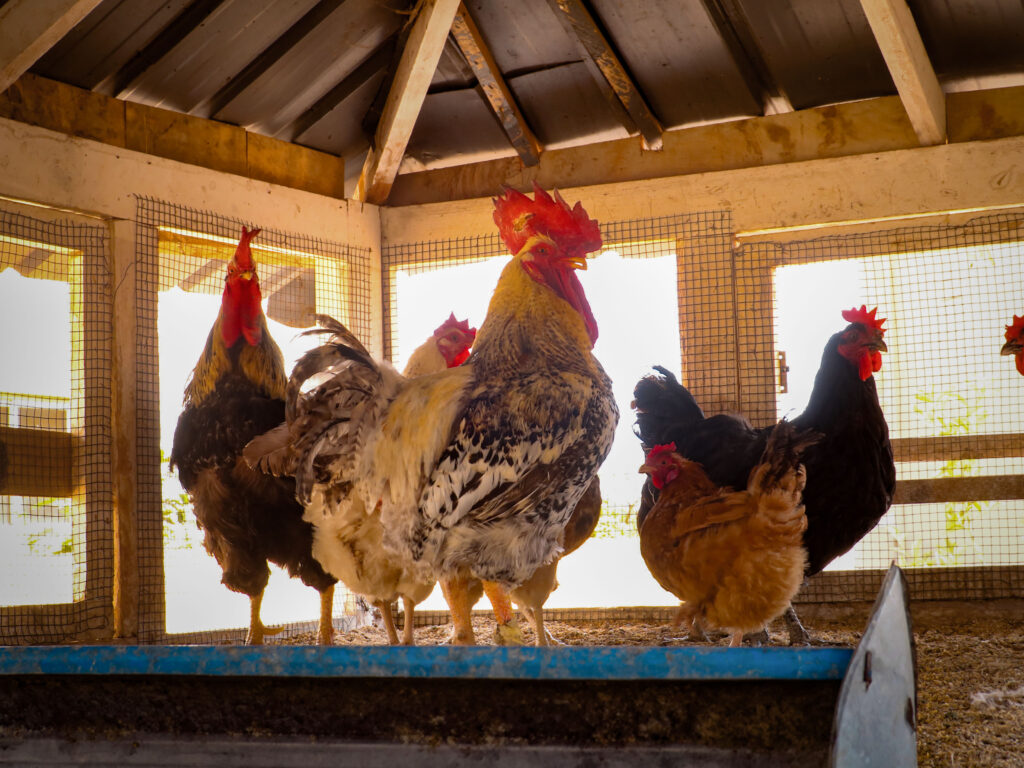
Free-range chickens raised at the Centre de Référence aux Métiers de l’Aviculture (CRMA) in Diamniadio, Rufisque, Senegal on April 29, 2026. Photo: Penda Thiam, bird story agency
The adoption of tools such as SEDAP’Tech comes as Senegal seeks to modernise its poultry industry. The country has achieved self-sufficiency in poultry production and is now working to increase productivity to meet future demand. Industry leaders argue that improving management practices and adopting technology will be essential if farmers are to scale production while reducing losses.
For Dr. Mamadou Ba, Secretary General of the Board of Directors at CRMA and one of Diouf’s former instructors, innovations must be linked to broader goals around food production and food security.
“These technological innovations must absolutely respond to this paradigm if we are to achieve the objectives we have set for ourselves. We must link technological innovation with the goals of production and productivity so that every Senegalese citizen can have access to quality chicken, in sufficient quantity, enabling us to cope with population growth and, in the future, ensure our food sovereignty. In Senegal, among all agricultural sectors, we can proudly say that poultry farming is currently the only sector that has achieved self-sufficiency,” said Ba. He says another change is taking place within the sector itself.
“We have increasingly noticed the emergence of women, who now make up almost 30 to even 50% of the cohorts we supervise.” He added.
One of those women is Seynabou Ndoye, who enrolled at CRMA after working as a trader. What began as curiosity has since become a pathway toward entrepreneurship.
“I used to do trading. Then I started this training. At first, I thought the training would only last six months. Later, I found out it was actually for three years. I didn’t even think I would continue the training because at the beginning, it was more out of curiosity than anything else. But currently, the training is inspiring me toward self-employment. I’ve even forgotten about the trading I used to do.”Ndoye said.
For Diouf, the journey from struggling poultry farmer to agritech entrepreneur has also gained wider recognition. In 2025, SEDAP’Tech won the Senegal edition of the AYuTe Africa Challenge, a competition that supports technology-driven agricultural solutions. The award recognised the platform’s role in helping poultry farmers monitor their operations remotely and improve productivity.
Yet the significance of her work lies less in the awards than in the problem it addresses. For Mengué Diouf, the work continues in the same places where it began—between the farm and the road that leads there each day. The difference now is not only in how she manages production, but in how she reads what the farm is telling her back. What once arrived as loss has been translated into a system she can follow, adjust, and expand.
In Keur Demba Anta, the poultry houses still require physical presence, routine checks, and long hours. But alongside that routine, a quieter shift has taken hold: decisions that were once delayed by distance are now made in the moment, often without stepping inside the farm itself.