In Nigeria’s southeastern city of Enugu, a photographer, a retired coal worker and a technology advocate see different possibilities for the place they call home. Their visions meet around one question: how can a city build its future while keeping its soul?
By Toochi Gabriel, bird story agency
Enugu (Énú Ụ́gwụ́ as it is pronounced and written in the Igbo language) is a city of hills. They rise around it like a wave of earth caught mid-motion, gone green and quiet, as if holding stories the streets below are slowly forgetting.
Chidera Sam Eze was born here. She has spent most of her life walking these streets, photographing them, watching them change. When she talks about the city, her voice carries something that sounds like love mixed with worry.
“Enugu translated in English is ‘on top of a hill,'” she says. “So you have a landscape that is breathtaking. It’s beautiful. There are the trees; the city is surrounded by hills, and you can tell when you look at the city that there’s a story.”
That story begins with coal.
The communities around the Udi Ridge knew of its presence before British geological surveys identified deposits in 1909. Colonial mining followed in the next decade, drawing workers and traders into the settlement that grew into Enugu.
People came from Calabar, Port Harcourt, Warri and elsewhere. They came because coal meant work. Coal meant money. Coal meant a life. You can still see those journeys in the street names. Port Harcourt Street. Calabar Street. Names that hold traces of the people who helped build the city.
“When you hear Port Harcourt Street, Calabar Street, it tells you that people came from different parts of Nigeria to settle in Enugu because of coal,” Chidera says. “So that birthed names of streets like that.”
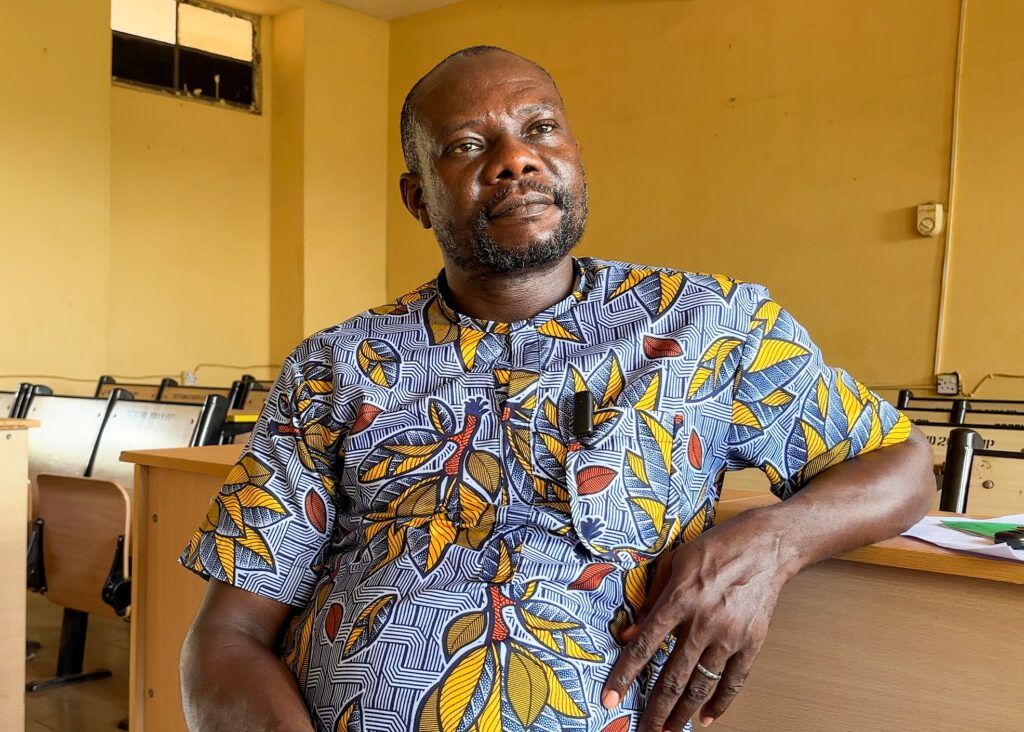
Hyacinth Ohagwu remembers those days. He is a retiree of the Nigerian Coal Corporation, and when he speaks, you can hear the weight of memory in his voice.
“I admired the city very much,” he says. “I still remember paydays, end of the month, when they were paying the coal miners. It was like just a jamboree, a bazaar, a mega bazaar. The whole metropolis would always know that something was happening that day. Anybody selling any item must experience patronage, no matter the article you brought to the pay point or the playground.”
He pauses, smiling at the memory.
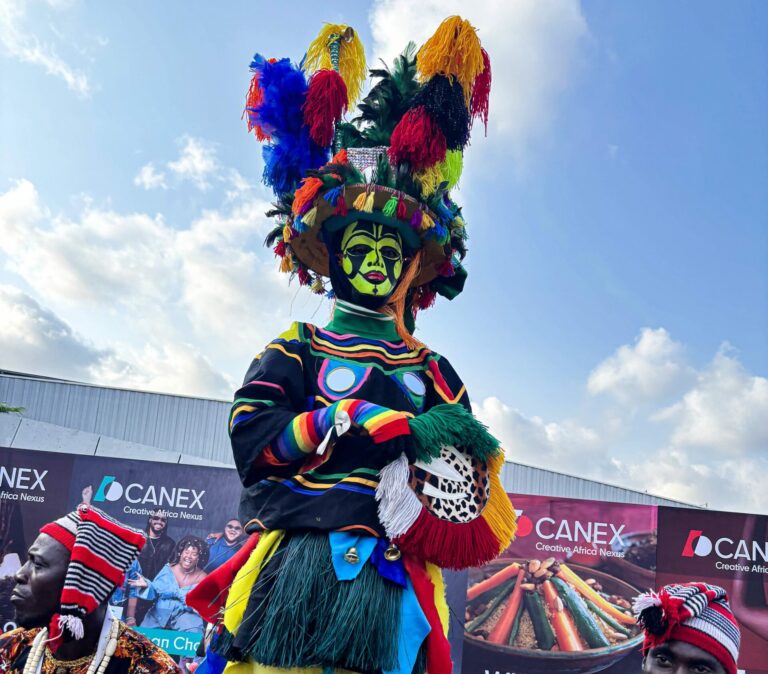
“Again, I used to participate in some masquerades with my peer group. We used to run around the whole—it was a funfair for us, very enjoyable. Nobody disturbed you. Even while the masquerade was going around the metropolis, we could come back home as late as 10 p.m. No problem. There was nothing like insecurity, quite unlike what is happening today.”
Mr. Ohagwu’s father worked in the mines. It was that job that put him through school, that fed his siblings, that gave their family a life they could be proud of.
“Personally, I must be frank,” he says. “I’m grateful to the Nigerian coal industry because my father worked there. I think that empowered him to train us in school up to the university level. All my siblings were well-fed; we were well taken care of by my father. If not for the empowerment given to him by the coal industry where he worked, I think I may not have had that opportunity to progress as far.”
But coal also brought pain. Mr. Ohagwu remembers the Iva Valley massacre of November 18, 1949, when British colonial police shot and killed twenty-one coal miners who were striking for back pay and better conditions.
“As a kid, I asked one of my uncles, ‘What do you mean by massacre?’ He told me, ‘Killing.’ Although I knew the meaning of massacre, how come there was a massacre? Was it that the miners were demanding their rights? I asked, ‘What kind of rights?’ He said they were owed some money and wanted improved service conditions and all that. I told him, ‘All that… that’s just that?’ He said, ‘That’s just that.’ The British government then, who were in control of Nigeria, did not want that to happen. They didn’t want to listen to them, and they just came in and started shooting them.”
He stops. Then he says: “It gave me a shocker.”
The coal industry declined after the Nigerian Civil War. By 2002, the Nigerian Coal Corporation had filed for bankruptcy. The mines were abandoned, and the city that had grown around coal had to find a new way to be.
Chidera sees the loss every day in the structures being torn down across the city. Through the Enugu Photo Festival—whose inaugural edition was titled Shades of Coal—she works to keep historical memory alive.
“Moments where certain structures are being torn down and replaced with structures that have no character,” she says. “Like tearing down the soul of the city and rebuilding with things that you don’t understand and have no story behind them. The soul of every city lives in the structures in it, and the things, and the people, and the little things that tell the story of the city. And when you start removing those things, you strip the city of its soul, and it becomes something else.”
“If you don’t know where you’re coming from, you can’t know where you’re going,” she adds. “So you have to look within yourself first to be able to move forward. And that’s what I’m trying to do with the Enugu Festival, telling the stories of the city.”
She worries that younger generations do not understand how deeply coal shaped the ground they walk on.
“I don’t think they understand how deep coal shapes this city,” she says. “I think it’s because there’s a huge gap between those who know, because they are older and are fading out, and those who don’t know, because there is no such curiosity.”
For Eliezer Chibundu Ajah, Head of Job Creation for 3MTT Nigeria at the Federal Ministry of Communications, Innovation, and Digital Economy, the city’s future lies in technology and entrepreneurship.
“Historically, Enugu has always been seen as two things: a civil servant state and a state that gets a lot of its oomph from the floor, from the ground, via coal,” he says. “Now, it’s moved beyond that. A lot of businesses are starting.”
However, Eliezer is explicit about the limits of technology as a standalone economic engine.
“If we’re thinking about startups hiring folks, definitely overstating the potential because there’s a finite amount of people that tech startups and tech businesses can hire,” he says.
Instead, Eliezer sees the wider opportunity in helping Enugu State’s estimated 1.5 million nano and micro businesses use digital tools to reach customers and grow. For those enterprises, reliable power and access to patient capital could help turn local livelihoods into businesses that sell beyond the city.
“There’s a capital concern where not enough capital, not enough patient capital, is deployed to the southeast,” Eliezer says. “There’s a brain drain that happens in Enugu where you do things, and you leave.”
Still, he believes in the local ecosystem’s capacity to adapt: “The use case for Enugu is not ‘beat Lagos’. The use case for Enugu is ‘build in Enugu and sell everywhere’.”
Grounding both the creative and tech movements is the physical city itself. Dr Chris Maduka Anierobi, Lecturer in Urban and Regional Planning at the University of Nigeria, Enugu Campus, and Chairman of the Nigerian Institute of Town Planners (Enugu State Chapter), points out that while Enugu benefited from colonial layout schemes like Independence Layout, Ogui, and GRA, it has lacked an approved master plan since 1979.
“Enugu is still going by layout planning schemes to date; no master plan,” Dr. Anierobi says. “History beckons on the current administration in Enugu State to institute a current town planning legislation for the city.”
He notes that historical sites like Coal Camp and Iva Valley hold UNESCO heritage interest and require deliberate spatial legislation to prevent decay.
“If you master plan, and the urban and regional planning law—if these two are instituted for Enugu in the next 20 years, Enugu will be a city of our dreams,” Dr. Anierobi says.
For Enugu, transitioning into its next chapter requires balancing historical preservation, urban planning, and new economic enterprise.
“The city already has soul,” Chidera reflects. “It already has character. The next version of the city should just be an upgraded version of what it used to be. So we have to find a way to merge the old with the new without necessarily destroying what used to be.”
She continues: “The city doesn’t need to take on another form entirely; or rather, it could grow into itself, grow into its skin, more like. So we don’t necessarily have to destroy one to make way for another. We can find a way to coexist, to place the old with the new, like a juxtaposition.”
The hills surrounding Enugu remain quiet witnesses to this transition, watching as a city forged in the coal pits learns to build its future without erasing its roots.
bird story agency